
Using sharp garden tools can completely change the way your garden looks and performs. Whether you are trimming shrubs, pruning roses, cutting grass, or digging compact soil, properly sharpened tools make gardening easier, faster, and much healthier for plants.
Many gardeners continue using dull tools without realizing the hidden damage they cause. Dull blades crush stems instead of making clean cuts, stress plants unnecessarily, and make simple gardening tasks feel exhausting.
At GardeningLovy, we always make garden tool sharpening part of our regular gardening routine because we have personally seen the difference it makes in plant recovery, cleaner pruning cuts, and overall tool performance. Over the years, while maintaining pruning shears, hedge clippers, hoes, and shovels, we noticed that sharpened tools not only worked better but also lasted much longer.
In this complete guide, we will share how to sharpen garden tools at home, the best sharpening methods, mistakes gardeners make, and the exact maintenance routine we follow.
Quick Answer
The best way to sharpen garden tools at home is to first clean the tool properly, remove rust and dirt buildup, then sharpen the blade using a metal file, sharpening stone, or grinder while following the original blade angle. Finish by wiping the blade clean and applying oil to prevent rust.
Why Sharp Garden Tools Matter
Many gardeners underestimate how important sharp gardening tools really are.
Sharp tools:
- Make cleaner cuts
- Reduce plant stress
- Prevent crushed stems
- Help plants heal faster
- Reduce disease spread
- Make gardening easier
- Extend tool lifespan
We noticed our roses and vegetable plants recovered much faster after pruning once we started sharpening our pruning tools regularly.
Signs Your Garden Tools Need Sharpening
Garden tools slowly lose their sharpness over time.
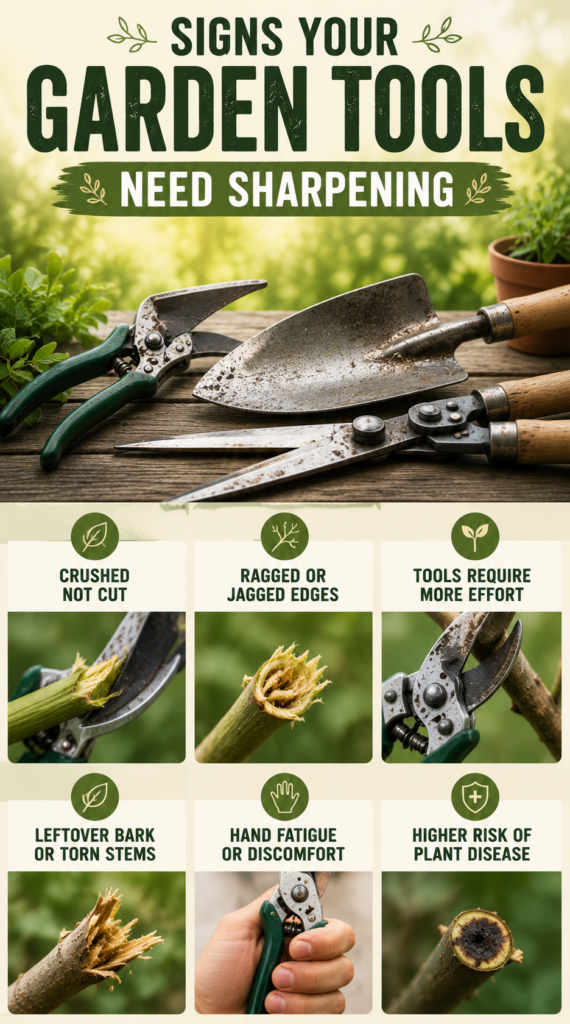
Here are the most common signs your tools need sharpening:
| Sign | What It Means |
|---|---|
| Crushing stems | Blade is dull |
| Rough cutting | Edge damage |
| Extra force needed | Loss of sharpness |
| Jagged cuts | Uneven blade |
| Rust spots | Poor maintenance |
| Slipping while cutting | Dull edge |
If pruning feels harder than usual, it is probably time for sharpening.
Garden Tools That Need Regular Sharpening

Not all garden tools require sharpening, but many commonly used tools do.
Most common hand tools can be sharpened at home with simple equipment. This includes pruning shears, loppers, hedge shears, knives, hoes, shovels, spades, trowels, and mattocks, although each tool needs a slightly different approach based on its bevel and blade shape.
These respond well to hand files, diamond sharpeners, or whetstones, and they do not require expensive workshop machines to get a strong working edge.
Most Common Garden Tools To Sharpen
| Tool type | Best sharpening method | Main point to remember |
|---|---|---|
| Pruning shears | Diamond file or fine sharpening stone | Sharpen only the beveled cutting blade |
| Loppers | File or diamond sharpener | Follow the factory bevel and avoid over filing |
| Hedge shears | Flat file or sharpening stone | Use long, even strokes on the bevel edge |
| Hoes | Mill file | Keep a shallow, even angle |
| Shovels and spades | Metal file | Work along front and back edge lightly |
| Garden knives | Whetstone or diamond tool | Maintain the original edge angle |
Pruning shears and hoes are the tools we sharpen most often because they become dull quickly during active gardening seasons.
Best Tools for Sharpening Garden Tools
You do not need expensive equipment to sharpen tools at home.
Here are the best sharpening tools for gardeners:
| Sharpening Tool | Best Use |
|---|---|
| Metal file | General sharpening |
| Sharpening stone | Fine sharpening |
| Diamond sharpener | Precision edges |
| Bench grinder | Heavy-duty tools |
| Sandpaper | Minor touch-ups |
| Wire brush | Rust removal |
For most home gardeners, a simple metal file works perfectly.
Step 1: Clean Garden Tools Before Sharpening
Before sharpening, always clean the tool thoroughly.
We never sharpen dirty tools because dried sap, rust, and soil can damage the blade edge and reduce sharpening quality.
Simple Cleaning Process
- Wash tools with warm soapy water
- Remove dirt and sap buildup
- Scrub rust using steel wool
- Dry completely
If tools are heavily rusted, soak them in vinegar first.
How To Remove Rust From Garden Tools
Rust weakens metal and makes sharpening harder.
We restore rusty gardening tools using this simple method.
Easy Rust Removal Method
- Soak rusty areas in white vinegar for 30 minutes
- Scrub with steel wool
- Wipe clean
- Dry completely
- Apply light oil
This method works especially well for rusty pruning shears, hoes, and shovels.
- Also read- Small Garden Tool Storage Ideas That Save Space and Reduce Clutter
- How To Keep Mosquitoes Away from Plants Naturally Without Harming Your Garden
Step 2: Follow the Original Blade Angle
This is one of the biggest sharpening mistakes gardeners make.
Every garden tool already has an original blade angle.
Instead of creating a new angle:
- Follow the existing edge
- Keep strokes even
- Maintain steady pressure
This helps preserve the strength of the blade.
Step 3: Sharpen the Blade Properly
How To Sharpen Using a Metal File
A metal file is one of the easiest sharpening tools for beginners.
Sharpening Steps
- Secure the tool properly
- Hold the file at the blade angle
- Push the file in one direction only
- Use smooth long strokes
- Repeat evenly
Avoid aggressive back-and-forth filing because it damages the blade edge.
We prefer slow smooth strokes because they create much cleaner sharpening results.
Step 4: Remove Burrs From the Blade
After sharpening, tiny metal burrs often appear on the blade edge.
Remove them by:
- Lightly rubbing the back side with a sharpening stone
- Wiping the blade clean
This creates smoother cuts during pruning.
Step 5: Oil Garden Tools After Sharpening
Freshly sharpened metal can rust quickly if left unprotected.
Always apply light oil after sharpening.
Good oils include:
Focus on:
- Blade edges
- Springs
- Pivot joints
- Moving parts
We always oil tools before storing them, especially during rainy months.
How To Sharpen Pruning Shears
Pruning shears are one of the most commonly used garden tools.
Best Sharpening Method for Pruning Shears
- Clean the blades first
- Open the shears fully
- Sharpen only the beveled edge
- Follow the original blade angle
- Wipe clean afterward
- Oil the pivot area
Avoid sharpening the flat back side too heavily.
How To Sharpen Hedge Shears
Dull hedge shears make trimming slow and exhausting.
Sharpening Process
- Clamp the shears securely
- Use long smooth file strokes
- Sharpen evenly across the blade
- Remove rust afterward
- Oil moving parts
Sharp hedge shears make trimming much smoother and cleaner.
How To Sharpen Shovels and Hoes
Many gardeners forget that digging tools also benefit from sharpening.
Sharp shovels:
- Cut soil easier
- Slice roots faster
- Reduce digging effort
Best Method
Use a metal file and lightly sharpen the front edge.
Do not over-sharpen shovels because extremely thin edges wear down faster.
How To Sharpen Lawn Mower Blades
Dull mower blades tear grass instead of cutting it cleanly.
This can lead to:
- Brown lawn tips
- Lawn stress
- Increased disease risk
Lawn Mower Blade Sharpening Steps
- Disconnect mower power
- Remove the blade carefully
- Secure the blade firmly
- Sharpen along the cutting edge
- Balance the blade afterward
Balanced blades help prevent vibration problems.
Best Sharpening Angles for Garden Tools
Different garden tools use different sharpening angles.
| Tool | Recommended Angle |
|---|---|
| Pruning shears | 20 to 25 degrees |
| Axes | 30 degrees |
| Hoes | 30 to 45 degrees |
| Shovels | 45 degrees |
The most important thing is maintaining the original angle consistently.
Common Sharpening Mistakes Gardeners Make
A few mistakes show up again and again in home tool care. Most of them are easy to prevent with a slower, cleaner approach.
In real home gardening, the biggest problem is usually rushing. A file used carefully for a few extra minutes nearly always gives better results than aggressive grinding.
Safety at Home
Sharpening is simple, but it still involves exposed metal edges and flying particles. Garden Design advises using heavy gloves and eye protection when sharpening, especially when working with files or power equipment.
A safe setup includes these habits.
- Work in good light so the bevel is visible.
- Clamp large tools securely whenever possible.
- File away from the body with controlled pressure.
- Keep children and pets away from the sharpening area.
- Wipe metal filings off the workspace before storing tools.
Sharpening is usually done outdoors or near an open utility area with a stable table, rag, and oil ready nearby. That small setup change reduces mess and keeps the routine calm instead of rushed.
How Often Should Garden Tools Be Sharpened
There is no perfect universal schedule because frequency depends on use, soil type, and the kind of plants being cut. Still, garden care sources make it clear that regular light maintenance works better than waiting until tools become obviously blunt.
A practical home schedule looks like this.
| Tool | Light touch up | Full sharpening |
|---|---|---|
| Pruning shears | Every few weeks in active season | When cuts stop feeling clean |
| Hedge shears | Before major shaping jobs | Mid season if used heavily |
| Spades and shovels | At season start | Once or twice more if soil is tough |
| Hoes | Before weed flush periods | As needed during peak growth |
For gardeners who prune often, checking the edge every few sessions is usually enough. A quick test on paper for pruners or a visual check for nicks on digging tools helps decide when it is time.
We usually sharpen pruning shears every few weeks during active growing seasons.
Manual Sharpening vs Electric Sharpening
Manual Sharpening
Benefits:
- Better control
- Safer for beginners
- Less heat buildup
Electric Grinding
Benefits:
- Faster sharpening
- Better for large tools
For most gardeners, manual sharpening works perfectly fine.
What should be done after sharpening
Wipe the tool clean, oil the moving parts or blade lightly, and store it in a dry location to reduce rust and keep the edge in good condition. The work is not complete until the tool is stored properly. UNH Extension recommends finishing with oil to lubricate moving parts and prevent rust, then storing tools in a clean, dry location.
This step matters in humid areas and rainy months because a fresh edge can quickly lose quality if it is left damp.
Sharpened tools are wiped down, lightly oiled, and hung rather than left on the floor or in a closed wet bucket. That simple habit has extended the life of pruners, trowels, and shears noticeably.
Best Way To Store Sharpened Garden Tools
Best Storage Tips
| Storage Method | Benefit |
|---|---|
| Dry storage | Prevents rust |
| Hanging tools | Improves airflow |
| Blade covers | Protects sharp edges |
| Oiled tools | Prevents corrosion |
Never leave sharpened tools outside overnight.
Why Sharp Tools Help Plants Recover Faster
Sharp blades make cleaner cuts, which helps plants heal faster.
Dull tools crush stems and create rough wounds that may allow:
- Fungus
- Rot
- Bacteria
- Disease spores
we noticed cleaner cuts always resulted in healthier recovery after pruning sessions.
Our Garden Tool Sharpening Routine
At GardeningLovy, we follow a simple maintenance routine for garden tools.
After Gardening
- Wipe tools clean
- Remove dirt buildup
- Dry completely
Weekly Maintenance
- Inspect sharpness
- Remove rust spots
- Oil moving parts
Monthly Maintenance
- Full sharpening
- Deep cleaning
- Tighten screws
- Check handles
This routine keeps gardening tools working smoothly throughout the year.
Can Rusty Garden Tools Be Sharpened
Yes.
Even old rusty tools can often be restored successfully.
The process is simple:
- Remove rust first
- Sharpen gradually
- Oil afterward
We have restored many old pruning shears and shovels using this exact method.
Best Oil for Garden Tools
Good oils include:
- Mineral oil
- WD-40
- Camellia oil
- Machine oil
Avoid cooking oils because they become sticky and attract dirt.
Frequently Asked Questions
Can garden tools be sharpened without expensive machines
Yes. Most home garden tools can be sharpened effectively with hand files, diamond sharpeners, and whetstones rather than power equipment.
What is the best tool for sharpening garden tools?
A metal file is one of the easiest and most affordable sharpening tools for home gardeners.
How often should pruning shears be sharpened?
Pruning shears should usually be sharpened every few weeks during heavy gardening seasons.
Can rusty garden tools be sharpened?
Yes. Remove the rust first before sharpening.
Why are my pruning shears crushing stems?
This usually means the blades have become dull.
Should garden tools be sharpened on both sides?
Some tools only require sharpening on one beveled edge.
Can I use a grinder to sharpen garden tools?
Yes, but overheating can damage the blade if done incorrectly.
Should both sides of pruning shears be sharpened
No. Bypass pruners are typically sharpened on the beveled cutting blade only, with only a light burr removal pass on the back side.
What is the best angle for sharpening garden tools
A common guideline for many garden tools is about 20 to 25 degrees, although the safest approach for most gardeners is to follow the original bevel already present on the tool.
Is a razor edge necessary on a shovel or spade
No. Digging tools need a durable working edge rather than an ultra fine razor edge, which is why a metal file and a shallow consistent bevel are usually enough.
How can it be checked whether pruners are sharp enough
A sharpened pruner should make a clean cut on paper or a small stem without tearing, which UNH Extension recommends as a practical home test.
Final Thoughts
Learning how to sharpen garden tools at home is one of the best gardening skills you can develop.
Sharp tools improve plant health, reduce effort, create cleaner cuts, and extend the lifespan of expensive gardening equipment.
At GardeningLovy, regular garden tool maintenance has become an important part of our gardening routine because healthy gardens always begin with healthy tools.
Even spending a few minutes sharpening your tools every month can make a huge difference in plant growth, pruning quality, and overall gardening results.

I am an enthusiast who loves plants very much and I do a lot of research online as well as outside in gardens and nurseries. I also strive to be as accurate as possible in my research and my articles. I have been involved in gardening for a long time and truly enjoy it. Know more about me About. You can also join me Here.