
Quick Answer: How Do You Get Rid of Root Maggots?
To get rid of root maggots, focus on stopping adult flies from laying eggs and protecting vulnerable plant roots. Floating row covers, crop rotation, sanitation, beneficial nematodes, and protective collars around young plants can all be useful parts of an integrated control strategy.
If plants are already affected, inspect the roots and surrounding soil for small pale larvae and feeding damage. Remove severely damaged plants and avoid immediately replanting another susceptible crop in the same location.
The most effective approach depends on whether you’re dealing with cabbage root maggots, radish root maggots, onion maggots, or another soil-dwelling larva.

You have noticed worm like bugs in the house and in the garden.
They are Root Maggots that exist in a number of home gardens. These are actually the larvae stage of a fly. They are grey in color and conical in shape. These are harmful to seasonal plants.
If you are worried about root maggots and want to get rid of Root Maggots In the Garden, then you should first read this article. You will get complete details of the insects and how you can get rid of them.
The quickest and the best organic ways to kill Root Maggots In the Garden are applying Diatomaceous Earth, keeping Keep Rove Beetles Insects, adding Beneficial Nematodes, And protecting plants with floating row covers. and many more. By applying these natural treatments, you not only save a lot of money but also protect other insects helpful garden insects like worms, and bugs, that also get killed when using chemical treatments.
Where Do Root Maggots Come From?
If a plant in your garden dies, it will attract the attention of flies that feast on dead plants. The fly will lay eggs in the soil, and the eggs can survive winter in the ground.
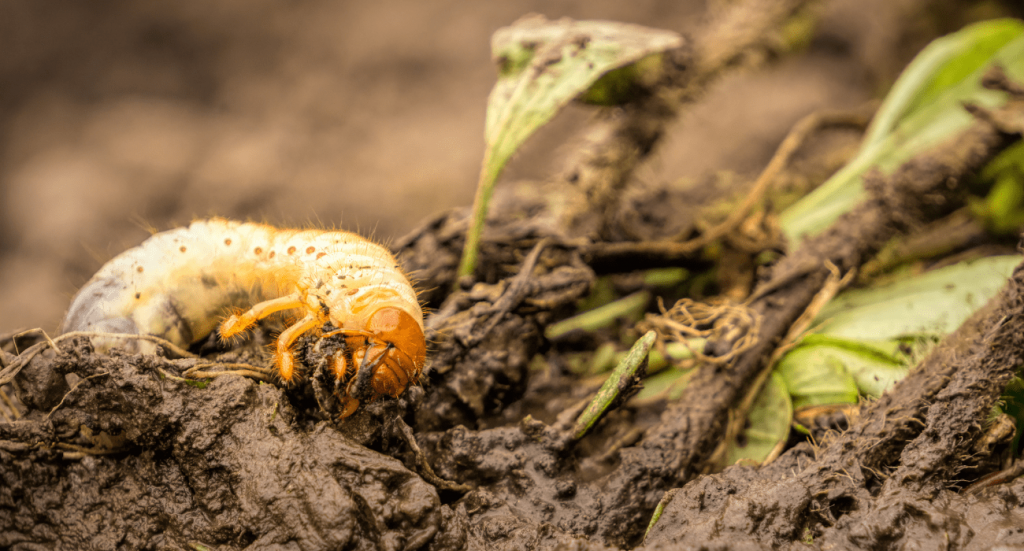
When the eggs are hatched, the big maggots in compost come out. The maggots will later come out to the surface when they have grown enough to keep the cycle running.
If you notice flies around your plants, it is better to check if one of them has died. Quick action can prevent maggots in the compost bin as well.
How To Identify Root Maggot Infestation In Potted Plants?
Maggots- Compost larvae themselves can be the killers of plants alone. If a live maggot infestation spreads from a dead plant to a live plant, then it can kill the live plant.
You can check for a sign of maggot infestation by gently lifting the plant. If you carefully examine the roots, you will notice holes in the roots of the plant.
You will also see maggots in the soil if you pay enough attention. Root huge maggots often attack pea or bean plants, but they can also affect other plants such as cruciferous plants.
They are not exclusive to a single type of plant and can be found in different vegetable plants as well.
Depending upon the plant, the maggots can range in colors such as black maggots, brown maggots, or fat little white worms in the house and compost.
Pictures of Root Maggots: What Do They Look Like?
When comparing pictures of root maggots, look for small, pale or whitish, legless larvae with tapered bodies. They are usually found around the roots or underground portions of affected host plants rather than crawling over leaves.

Look for these signs together:
- Small pale or whitish larvae around plant roots
- Tunneling or feeding damage in roots
- Wilting or stunted young plants
- Yellowing despite adequate moisture
- Damaged radishes, turnips or other susceptible root crops
- Larvae inside or immediately around damaged roots
Important: Not every white larva or maggot in soil is a root maggot. Fungus gnat larvae, other fly larvae and beneficial decomposers can look similar at first glance.
Root Maggot Damage: 7 Signs to Look For
Root maggot damage often starts below ground, so gardeners may notice problems with the plant before seeing the larvae themselves. Knowing the common root maggot symptoms can help you investigate the problem earlier.
Watch for:
- Young plants that suddenly wilt or struggle to grow
- Yellowing or weak-looking foliage
- Stunted plant growth
- Tunnels or scars in edible roots
- Damaged or decaying root tissue
- Small pale root maggot larvae around affected roots
- Plants that pull unusually easily from the soil because roots have been damaged
Radishes, turnips, cabbage-family crops and onions can show different types of damage, so examine the roots rather than diagnosing the problem from leaf symptoms alone.
If you suspect an infestation, gently inspect the soil around a struggling plant and compare any larvae you find with reliable root maggot identification images.
What IS The Life Cycle Of Root Maggots?
Understanding the root maggot life cycle can help you control the pest before larvae seriously damage your vegetables.
The cycle generally moves through four stages:
Adult fly → Eggs → Root maggot larvae → Pupae → Adult fly
Adult root maggot flies lay eggs near susceptible host plants. After the root maggot eggs hatch, the small larvae move toward underground plant parts and begin feeding.
During the larval stage, root maggot larvae can tunnel into or feed around roots, bulbs and other underground plant tissue. This is the stage when most crop damage occurs.
After feeding, the larvae develop into pupae in the soil. Adult flies later emerge and the cycle begins again.
Because much of the damaging stage occurs underground, preventing adult flies from laying eggs near vulnerable crops is an important part of long-term root maggot control.
- How To Add Calcium To Soil [21 Working Ways] Exclusive Guide
- How To Sterilize Soil For Plants Growth [21 Affordable Tips]- Ultimate Guide
- How To Add Nitrogen To Soil – Exclusive [15 Quick + Cheap Ways]
- Greenleaf Organic Pest Control: Best (#21) Tips To Follow [DIY]
- How To Harvest Lettuce! So It Keeps Growing – Ultimate Guide With [15 Tips]
- How To Harvest Spinach Crop! So It Keeps Growing- Exclusive [15 Ways]
What Kills Root Maggots?
Gardeners searching for what kills root maggots should think beyond simply killing visible larvae. Root maggot management works best when you interrupt their life cycle and prevent adult flies from reaching susceptible crops.
| Control Method | Best Use |
|---|---|
| Floating row covers | Preventing adult flies from reaching crops |
| Beneficial nematodes | Biological soil-pest management |
| Crop rotation | Reducing recurring infestations |
| Plant collars | Protecting the base of young plants |
| Garden sanitation | Removing infested crop debris |
| Diatomaceous earth | Sometimes used as a dry physical barrier; effectiveness decreases when wet |
Prevention is especially important because larvae feeding underground can be difficult to control once they are established inside plant roots.
How to Get Rid of Root Maggots Naturally
#1 Diatomaceous Earth for Root Maggots
- Diatomaceous earth is a sedimentary rock that appears naturally through objects breaking down.
- Diatomaceous earth has the property of filtering fluids and is useful for cutting off the maggots’ paths in my compost.
- Even the largest maggot has lipids outside of its exoskeleton, which it needs to survive since the diatomaceous earth absorbs those lipids.
- It becomes difficult for the fly larvae in compost to travel through it. It can also kill maggots when large larvae contact diatomaceous earth for an intensely long time.
#2 Sticky traps
- Sticky traps are also a fun little expansion for garden security. You can buy and use small sticky pads that can be brought from any shop near your house almost instantly.
- You can hang these pads near your plants or any other light sources you might own to catch the black soldier fly compost bin.
- Flies in compost that spread infestation get caught in the cushions, and then you can throw the pillow out.
- It is an easy way to get rid of annoying pests that might hinder your gardening experience.
#3 Paper collars
- Paper collars are great for protecting small plants that are vulnerable to infestations.
- You can use these collars beneath the plantation, and the flies will not be able to lay eggs on the plants.
- It is also cheap to buy and can be brought together with sticky pads. Large larvae can also be filtered with the help of paper collars.
#4 Beneficial nematodes
- Beneficial nematodes are also an essential commodity in gardening as they ease infestation control.
- You can put the nematodes as a top dressing around plants, and they will take care of the larvae, which are small and have not surfaced yet.
- This is perfect for black soldier fly larvae. Black soldier fly larvae in compost are maggots and can be annoying when uncontrolled.
#5 Use of cleaning solutions
- You can also use several cleaning solutions that you can purchase from a garden store such as pyrethrin.
- This method should be used as a last resort when the infestation reaches an unhealthy scope of growth.
- This solution can clean maggots in compost. Maggots are decomposers but they are unhealthy for the garden.
#6 Being careful and alert
- Being careful about your plants can also be a great help in the prevention of the next infestation.
- If you destroy dying crops and root maggots in compost faster than they decompose, you will be saving yourself from annoying flies attacking it.
- Burning crops is the right way of getting rid of organic matter and even contaminants, but you should be careful about where you dispose of the ashes.
- The decomposing crop is a good idea, but only if red maggots do not already infest them.
- It would help if you also destroyed any overwintering sites that might exist in your garden.
#7 Keep Rove beetles insect
- Rove beetles and other valuable insects are very good for your garden.
- The beetles and other insects eat maggots and black soldier fly compost try investing in your garden.
- Even one fly can be very harmful, so these insects maintain a harmonious balance between every aspect of the park.
How To Get Rid Of root Maggots Naturally in potted plants?
These insects reside in the soil of your garden and may even build homes deep down.

- White maggots in compost are easily detectable and removable. Grey maggots can be a pain to get rid of, but you can take specific actions to control their population.
- The first and most obvious step is to get rid of the infested plant ridden with soldier fly compost infestation.
- You cannot compost these plants, so the best option is to put them in the trash or burn them.
- It is indeed sad that infested plants are beyond saving, but you can do a lot to keep the other plants safe.
Read how to get rid of common gardening bugs.
- Quick Help! How To Identify And Get Rid Of Springtails Bugs Without Any Toxic Sprays
- How To Thrips Control Within (24 Hrs) Naturally (Without Toxic Sprays)
- Ants In Garden: [21 Cheap Ways] To Get Rid Of Ants In Garden Naturally
- How To Get Rid Of Powdery Mildew [15] Easy Yet Effective Ways
- How To Get Rid Of Mealybug Eggs In Soil [21 Affordable Ways]
Maggots in Soil: How to Identify & Get Rid of Them
Finding maggots in soil, maggots in garden soil, or maggots in plant soil does not automatically mean you have root maggots.
First identify where the larvae are feeding. Larvae clustered around damaged vegetable roots may indicate a root-feeding pest, while larvae associated mainly with decaying organic material may be decomposers. Very small larvae in persistently moist potting mix may indicate a different pest problem.
Correct identification should come before treatment because the solution for root maggots may be very different from the solution for larvae living in compost or decomposing organic matter.
Maggots in garden soil occur because of dead plants decomposing inside. Flies act as a significant part of decomposing biological material in the ground that falls from trees and plants.
Dead animals can also sometimes act as a catalyst for a maggot infestation. When a dead animal or plant decomposes, flies lay their eggs on the decomposing babies.
Those eggs then feast on the finished material to become more flies. It would help if you were wary of any plants and animals decomposing in your garden.
Never put a pile of dead weed or grass for a long time, or it can become a breeding ground for dangerous flies and maggot larvae.
how to get rid of White Maggots In Soil
Small white larvae worms in your houseplant or garden soil can be larvae of the fungus gnat.
- The fungus gnat fly lays eggs on decomposing plant leftovers and can reach the plant root if ignored.
- The fly lays eggs in moist parts in general so that you can check your watering routine.
- If you overwater your plant, your plant pot can become a breeding ground for a fungal gnat.
- A soil moisture meter can help you check for reasonable moisture rates, and you can water the plants in time with ease.
- You can also avoid gnats by checking the plant pots before bringing any new plants home.
- You can check for white spots on the pot to help you be aware of any infected plants.
- A forceful spray of water on the topsoil and the bottom of the pot can help you get rid of annoying pest eggs.
Vegetable Root Maggots
Some bugs in your vegetable garden are natural predators and play a significant role in maintaining the garden’s natural order.
Your vegetable plants require those bugs, too, so you must leave them around for their purpose.
You can catch worms as well but be careful because I had maggots in my worm bin. Maggot worm is also something that you cannot store with you.
How To Control Vegetable Root Maggots
Educating yourself on the right bugs to catch can help you get educated in multiple tools available for help.
- To see bugs that lay maggots, you can place cups of water in your garden. When bugs get knocked off the leaves of plants, they will fall into the water. You can later feed the bugs to any chicken or ducks.
- But if you do not have chickens or ducks on your farm, you can isolate the water bodies to make sure the insects drown in the cup of water. Sometimes you can catch root maggots in the garden with this method.
- You can also kill the big larva on the leaves. There are electric nets available for purchase in a general gardening shop.
- You can touch the bugs to the net, and they will instantly fry to a crisp. Ladybugs are essential and beneficial for the vegetable garden.
- So be sure you do not kill them. Mexican bean beetles also look very similar to ladybugs, but there is an easy way to differentiate.
- If the bug’s body is red while the head is black, leave it as a ladybug. But if the entire body is orange or red, you should kill that sneaky beetle.
- Mexican bean beetles are also very tolerant of pesticides and other general garden pest controls. Manually removing them is the only way to get rid of them.
Also, find below an interesting video to revive Pothos yellow leaves.
What About Maggots in Peas?
If you find maggots in peas or around pea roots, don’t assume they are the same insects affecting cabbage or radishes. Inspect where the larvae are feeding and identify the pest before choosing treatment. Remove heavily damaged plant material and avoid moving potentially infested soil or crop debris into unaffected garden beds.
List of plants that can have maggots damage easily?
Maggots, especially root maggot flies, damage the roots and lower stems of many plants. Common plants and vegetables prone to pest attacks include:
- Cruciferous vegetables include cabbage, broccoli, cauliflower, and Brussels sprouts. It’s typical for cabbage maggots to eat the roots and sometimes the stem.
- Root vegetables including radishes, turnips, and carrots are regularly eaten by root maggots. After burrowing, the roots decay or become inedible.
- Onions, garlic, leeks, and shallots are attacked by onion maggots. Tunneling into bulbs causes yellow and wilt plants.
- Leafy Greens: Some maggots feed on the roots of spinach and lettuce, but this is less common than on cruciferous and root vegetables.
- These pests destroy crops and impair yield and marketability. Protecting these plants from maggot damage requires effective management and prevention.
Radish Root Maggot Control
Radish root maggot control should begin before larvae start tunneling into developing radishes. Once feeding damage is extensive, the affected root usually cannot be restored.
To reduce problems:
- Use floating row covers early to prevent egg-laying flies from reaching young plants.
- Rotate radishes and related crops rather than planting them repeatedly in the same location.
- Remove badly infested roots and crop debris.
- Control susceptible weeds around the growing area.
- Inspect harvested radishes for tunnels, scars and larvae.
- Avoid moving infested soil or roots into unaffected beds.
If you’ve been wondering how to keep worms out of radishes, first identify the pest correctly. The “worms” inside damaged radishes may actually be insect larvae rather than true worms.
Cabbage Root Maggot Control
Cabbage root maggot control is particularly important for young brassica plants because feeding around the roots can interfere with water and nutrient uptake.
If you want to know how to get rid of cabbage root maggots, concentrate on prevention:
- Protect young plants with properly installed floating row covers.
- Rotate cabbage-family crops to a different growing area when practical.
- Remove heavily infested plants and roots.
- Keep the growing area free of leftover susceptible crop material.
- Use physical barriers or collars around young transplants where appropriate.
Check underneath struggling plants rather than assuming wilting is caused by insufficient watering.
Onion Maggot Control
Onion maggots can damage onions and related crops by feeding on underground plant tissue and developing bulbs. Affected plants may become weak, yellow or wilted, while damaged bulbs may be more likely to deteriorate.
For onion maggot control, remove badly affected plants and bulbs, avoid moving infested material into clean beds, rotate susceptible crops when practical, and use appropriate preventive barriers or other locally recommended controls.
Garlic, leeks and shallots can also be affected by related pest problems, so inspect struggling plants carefully before deciding on treatment.
How to Prevent Root Maggots in Your Vegetable Garden
Learning how to prevent root maggots can be more effective than trying to control larvae after they have started feeding underground.
For practical root maggot prevention, focus on making susceptible crops harder for adult flies to reach and avoiding conditions that allow infestations to continue from one crop to the next.
- Install floating row covers early, before adult flies can lay eggs near susceptible plants.
- Rotate susceptible vegetable families when garden space allows.
- Remove heavily infested roots and crop residues after harvest.
- Don’t move infested soil or plant material into clean growing beds.
- Use appropriate plant collars around vulnerable seedlings.
- Monitor young cabbage, broccoli, cauliflower, radish, turnip and related crops for early damage.
- Keep records of where serious infestations occurred so you can adjust future planting plans.
For organic root maggot control, combining prevention, monitoring, physical barriers and appropriate biological controls is generally more useful than relying on a single treatment after extensive root damage has occurred.
Maggots in Compost: Good or Bad?
Finding maggots in compost doesn’t necessarily mean your compost has failed. Compost bins can attract different types of fly larvae, particularly when they contain moist, decomposing organic material.
So, are maggots good for compost?
The answer depends on which larvae are present. Some fly larvae feed primarily on decomposing organic matter and can contribute to decomposition. However, large numbers may indicate that your compost is too wet, contains exposed food scraps, or needs a better balance of green and brown materials.
Importantly, larvae living in decomposing compost should not automatically be identified as root maggots.
If you’re wondering whether maggots in compost are good or bad, check the condition of your pile. Strong odors, excessive moisture, exposed kitchen scraps and heavy fly activity suggest that your compost management needs adjustment.
To discourage excessive fly larvae:
- Cover fresh kitchen scraps with brown material.
- Avoid leaving food exposed on top.
- Maintain a balanced mix of moist greens and dry browns.
- Improve airflow if the pile is overly wet or compacted.
- Keep the bin covered while maintaining suitable ventilation.
How To Get Rid Of Maggots In Kitchen Compost Bin
Natural homemade bug sprays are great tactics for getting your garden organized during winter.
Most bugs stay under leaves to get protection from wind or rain. This recipe is for a poisonous pepper spray, so do not use it in windy or rainy situations; otherwise, it will wash off with time.
You will also have to wear protective gear to ensure no particle of the spray gets in your eyes or nose.
White bugs in compost are very easy to kill with this pepper spray. Maggots in mulch that become white bugs also can be neutralized quickly.
Making the spray recipe:
- Cut up and mash a piece of garlic.
- Take mint, hot red peppers, and garlic in a pan and fill it with a quarter quantity of the pan.
- Boil the mixture until water starts to evaporate fast.
- Let the mixture sit overnight.
- Strain the liquid in the morning.
- Add a little dish of liquid per gallon as you add water.
You can use this simple mixture to get rid of many harmful bugs that might plan to feast on your plants.
This liquid can help you take a lot of effort out in winter and autumn. You can make enough spray depending open your plant count and need throughout seasons.
The spray is effective on large grubs in compost because it has a lot of spicy ingredients.
Find below my top picks on bug spray for maggots, if you are looking to get other options than natural ways as described above.
No products found.
termite larvae vs maggots?
Like many people get confused in order to identify Termite Larvae and maggots. Since they belong to the same larvae family, they still have distinct features, that will make them separate. Let’s find out below a quick comparison between termite Larvae vs. Maggots.
| Properties | Maggots | Termite Larvae |
|---|---|---|
| Size | The bigger size can be seen | Small, tiny bugs ( 1/10 inch) |
| Colors | Big whitish-brown body | soft, white bodies |
| Body elements | Maggots only have head with a tube-like body | Maggots only have a head with a tube-like body |
| Larvae Growth | Grow into flies | Grow into termites. |
- How To Prune Mountain Laurel (21 Pro Ways)- Step By Step
- Signs Of Termites In Trees: [25] Quick Fixes To Identify + Prevent ASAP
- Ants In Garden: [21 Cheap Ways] To Get Rid Of Ants In Garden Naturally
- Greenleaf Organic Pest Control: Best (#21) Tips To Follow [DIY]
- How To Harvest Lettuce! So It Keeps Growing – Ultimate Guide With [15 Tips]
FAQS Root Maggot Treatment
Q: Does Ortho Home Defense Kill Maggots?
Whether Ortho Home Defense kills maggots depends on the exact product and its labeled pests and application sites.
Do not apply a household perimeter insecticide to edible garden crops, compost, or garden soil unless the product label specifically allows that use.
For root maggots affecting vegetables, prioritize crop-specific controls and follow pesticide labels exactly.
Q: Is killing maggot Bugs with salt effective?
Yes, salt is very effective in maggot treatment. Sprinkle a little salt on maggots can make them suffocate and dehydrate.
That results in instant relief from maggots in the home, garden, and dustbin.
Q: Quick remedies to kill maggots in the house on the floor?
In order to kill maggots that are on the floor, you can use boiling water, vinegar, and saltwater spray. Also, you can use salt on them.
Q: Can Root Maggots Live in Raised Garden Beds?
Yes, root maggots can occur in raised beds when susceptible crops are accessible to adult flies. Raised beds alone do not prevent infestation. Floating row covers, crop rotation where practical, sanitation, plant monitoring and other preventive methods can help reduce problems.
Q: Root Maggots vs. Fungus Gnat Larvae: What’s the Difference?
Root maggots and fungus gnat larvae are different pests. Root maggots are associated with susceptible vegetable crops and can damage underground plant tissues.
Fungus gnat larvae are commonly associated with moist, organic-rich potting mixes and are especially common around houseplants and seedlings.
If you find small white larvae in soil, identify where they are living and what they are feeding on before choosing a treatment.
Q: What Is the Best Root Maggot Insecticide?
The appropriate root maggot insecticide depends on the crop, root maggot species, location, and products currently registered for that specific use.
Never assume that a general garden or household insecticide is suitable for edible vegetables. Check the product label carefully for the crop, pest, application method and timing.
For home vegetable gardens, preventive measures such as floating row covers, crop rotation, sanitation, plant collars and appropriate biological controls can reduce reliance on insecticides.
Q: What is the best insecticide for root maggots?
The best insecticide for root maggots often depends on the specific crop and local regulations regarding pesticide use. However, some commonly recommended insecticides include:
- Spinosad: This is a natural substance made by a soil bacterium that can be toxic to insects. It is often used in organic farming and is effective against a variety of pests, including root maggots.
- Permethrin: A synthetic chemical that acts as a neurotoxin for insects. It is broad-spectrum and can be effective against root maggots, but it should be used carefully to avoid harm to beneficial insects and to comply with local environmental regulations.
- Chlorpyrifos: A powerful, broad-spectrum insecticide, though its availability and use are restricted or banned in many areas due to environmental and health concerns.
- Diatomaceous Earth: While not an insecticide, diatomaceous earth can be effective as a physical barrier around plants. It works by causing abrasions on insects that crawl over it, leading to dehydration.
Conclusion
You can do garden management in any household without sacrificing a lot of time. And now you know how to get rid of root maggots in compost.
An excellent homemade bug spray is also a good counterpart for market bug sprays that have variety. Bug spray is a good strategy for bugs that hide under leaves.
The possibilities are immense, but some are illogical depending on your resources.
You can choose the best possible solution that meets your requirements for the time being. However, experiments are successful with sufficient effort.

I am an enthusiast who loves plants very much and I do a lot of research online as well as outside in gardens and nurseries. I also strive to be as accurate as possible in my research and my articles. I have been involved in gardening for a long time and truly enjoy it. Know more about me About. You can also join me Here.