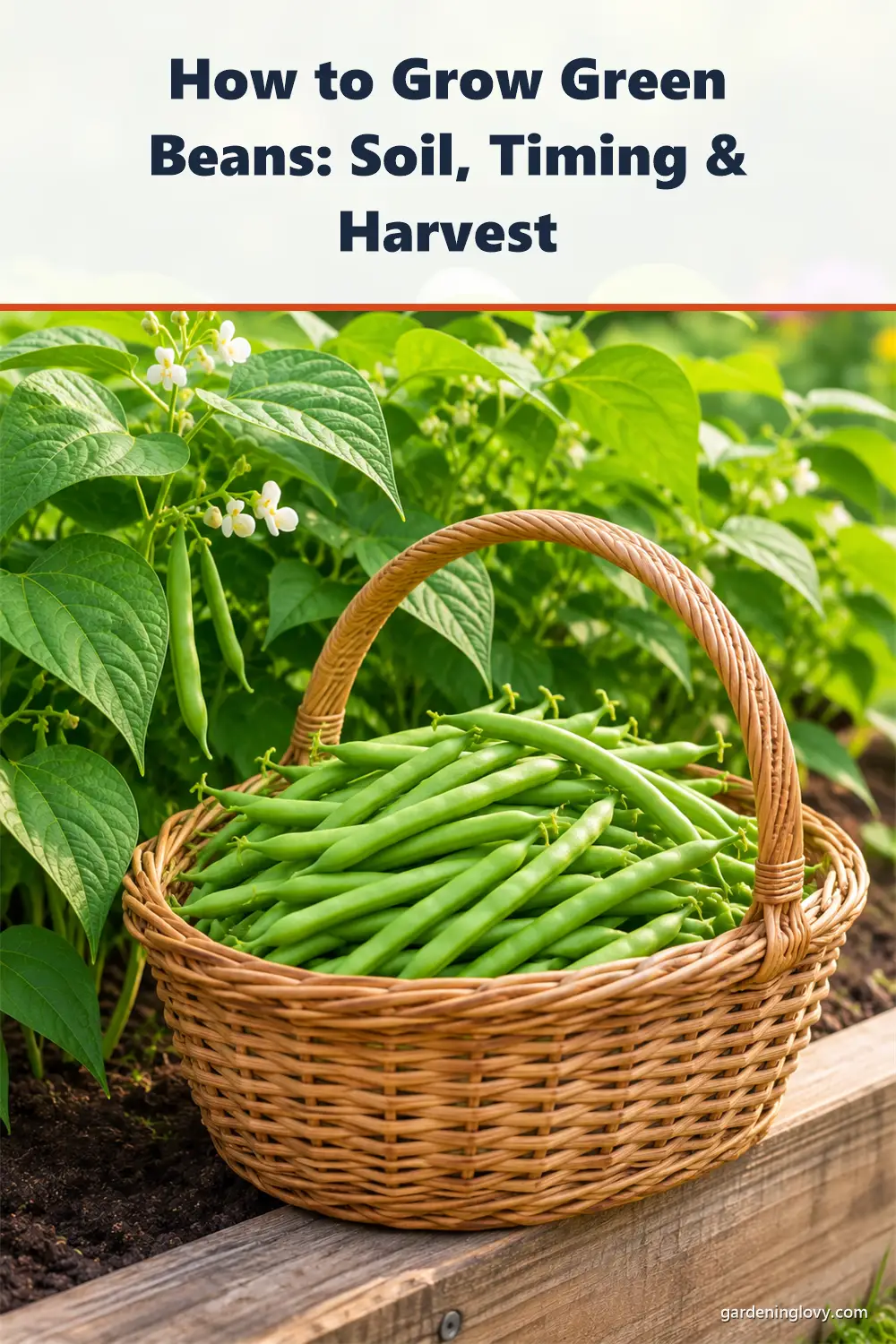
Here’s how to grow green beans: sow seeds 1 inch deep in warm, well-drained soil in full sun, after your last frost. Keep the soil evenly moist and pick often. Most varieties are ready in 50 to 60 days.
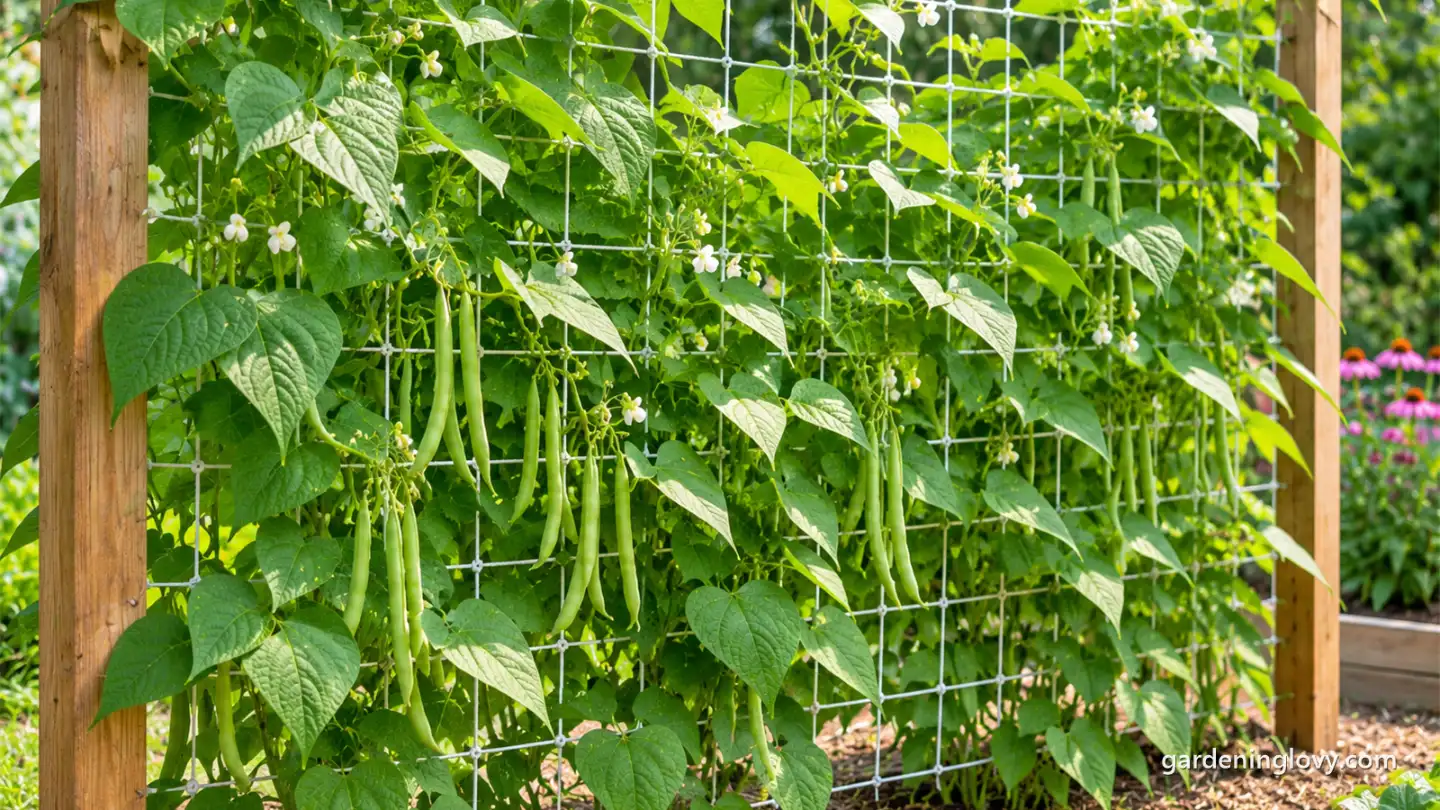
Bush beans need no support, while pole beans need a 6 to 8 foot trellis. If you’re planning a full summer bed, green beans pair well with an easy crop like zucchini.
This post contains affiliate links. As an Amazon Associate, Gardening Lovy earns from qualifying purchases.
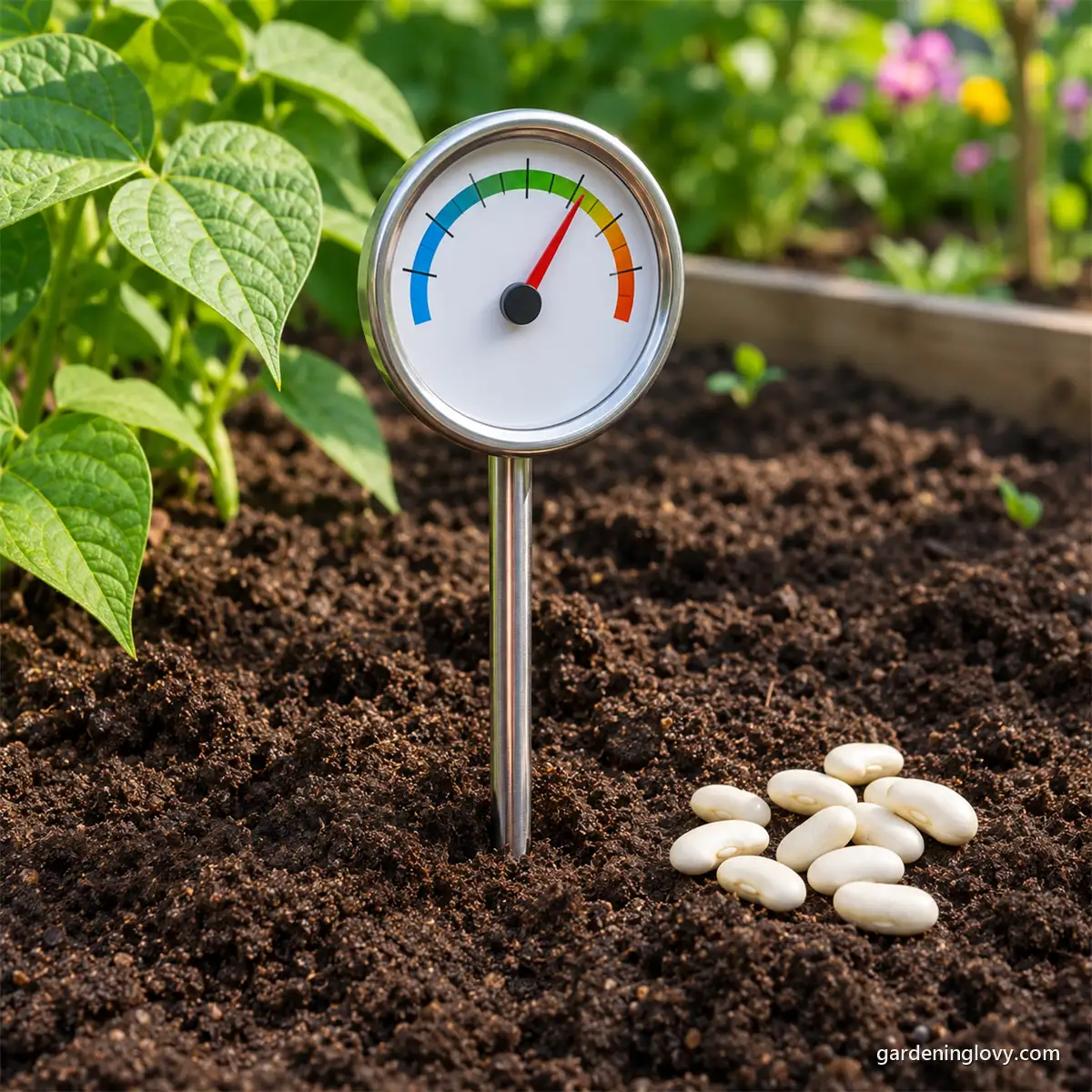
One tool worth having: a soil thermometer. Soil warmth, not the calendar date, decides whether bean seeds sprout or rot.
| Green beans at a glance | |
|---|---|
| Sow | Outdoors, after the last frost, in soil at 60°F (16°C) or warmer |
| Depth and spacing | 1 inch (2.5 cm) deep; bush beans 2–4 in. apart, pole beans 6–8 in. from each pole |
| Sun | Full sun, 6–8+ hours |
| Soil | Loose, well-drained, pH 6.0–6.5 |
| Water | About 1 inch (2.5 cm) a week, more while pods form |
| Feeding | Light; beans need little nitrogen |
| Harvest | 50–60 days; pick every 2–3 days |
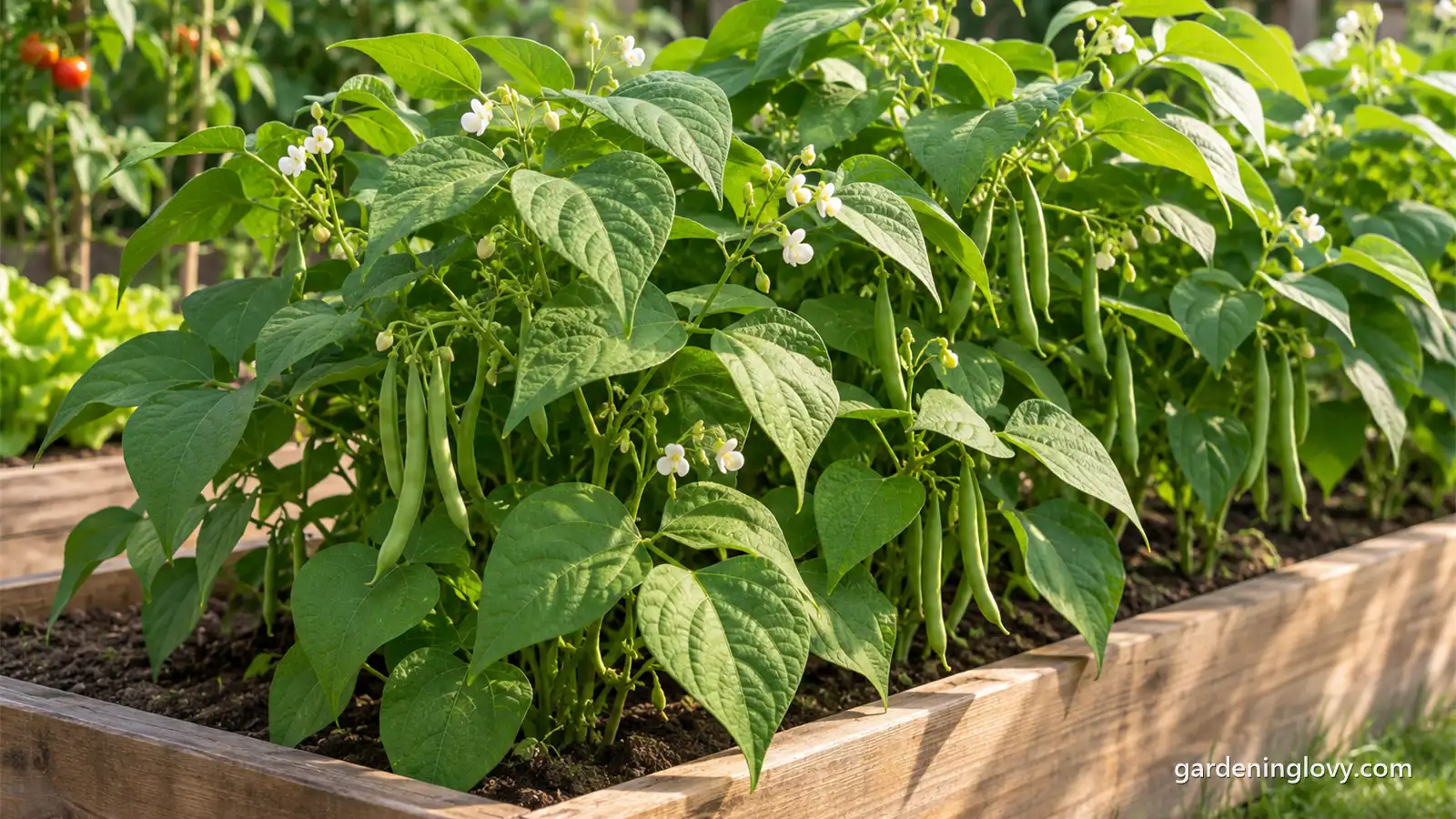
Bush beans vs pole beans: which to grow
Both are the same species, Phaseolus vulgaris. The difference is how they grow and when they crop.
| Bush beans | Pole beans | |
|---|---|---|
| Height | About 18–24 in. (45–60 cm) | 6–10 ft (2–3 m), needs support |
| First pods | Sooner, about 50–55 days | Later, about 60–70 days |
| Harvest window | A few weeks, then done | Until cold weather, if picked often |
| Best for | Pots, small beds, quick crops | Small footprints with height, long harvests |
| Varieties | Provider, Contender, Bush Blue Lake 274 | Kentucky Wonder, Blue Lake |
Short on time? Grow bush beans for speed and sow a new row every two weeks. Short on space? Grow pole beans for height and a longer harvest from the same square foot.
When to plant green beans
Go by soil temperature, not the date. Bean seeds sit and rot in cold, damp ground, and a light frost kills the plants.
Extension services give slightly different minimums. Clemson says not to plant until the soil is at least 60°F at a 4-inch depth. The University of Georgia gives 55°F as the floor, and UConn notes germination slows below 65°F.
| Soil temperature at 4 in. (10 cm) | What happens |
|---|---|
| Below 55°F (13°C) | Too cold. Seeds are likely to rot. |
| 55–60°F (13–16°C) | Possible, but slow and patchy. |
| 60–65°F (16–18°C) | Safe to sow. |
| 65–85°F (18–29°C) | Fast, even sprouting, often within a week. |
In most of the US that means one to two weeks after your last frost. In the UK, the RHS suggests sowing outdoors in late May or early June, or indoors from late April for an earlier crop.
For a steady supply, sow bush beans every 10 to 14 days until midsummer. For a fall crop, count back from your first fall frost: the variety’s days to harvest, plus about two weeks.
Best soil for green beans
Beans want loose, well-drained soil that warms quickly in spring. UConn recommends a sandy loam with a pH of 6.0 to 6.5, though heavier clay works if you loosen it well.
- Drainage first. Waterlogged soil causes seed rot and root rot. On heavy clay, grow beans in a raised bed or mounded row.
- Compost, not rich fertilizer. Dig in 1 to 2 inches of compost a few weeks before sowing.
- Check the pH. If a soil test reads below 6.0, see how to raise soil pH naturally before planting.
Go easy on feeding. The University of Georgia notes that green beans are legumes and don’t require a lot of fertilizer. If your soil is truly poor, our guide on adding nitrogen to soil covers gentle options.
How to grow green beans from seed, step by step
- Put supports in first. For pole beans, set up the trellis, netting or a teepee of three poles before you sow, so you don’t disturb roots later.
- Soak the seeds (optional). An overnight soak in warm water speeds up sprouting. Sow them the same day.
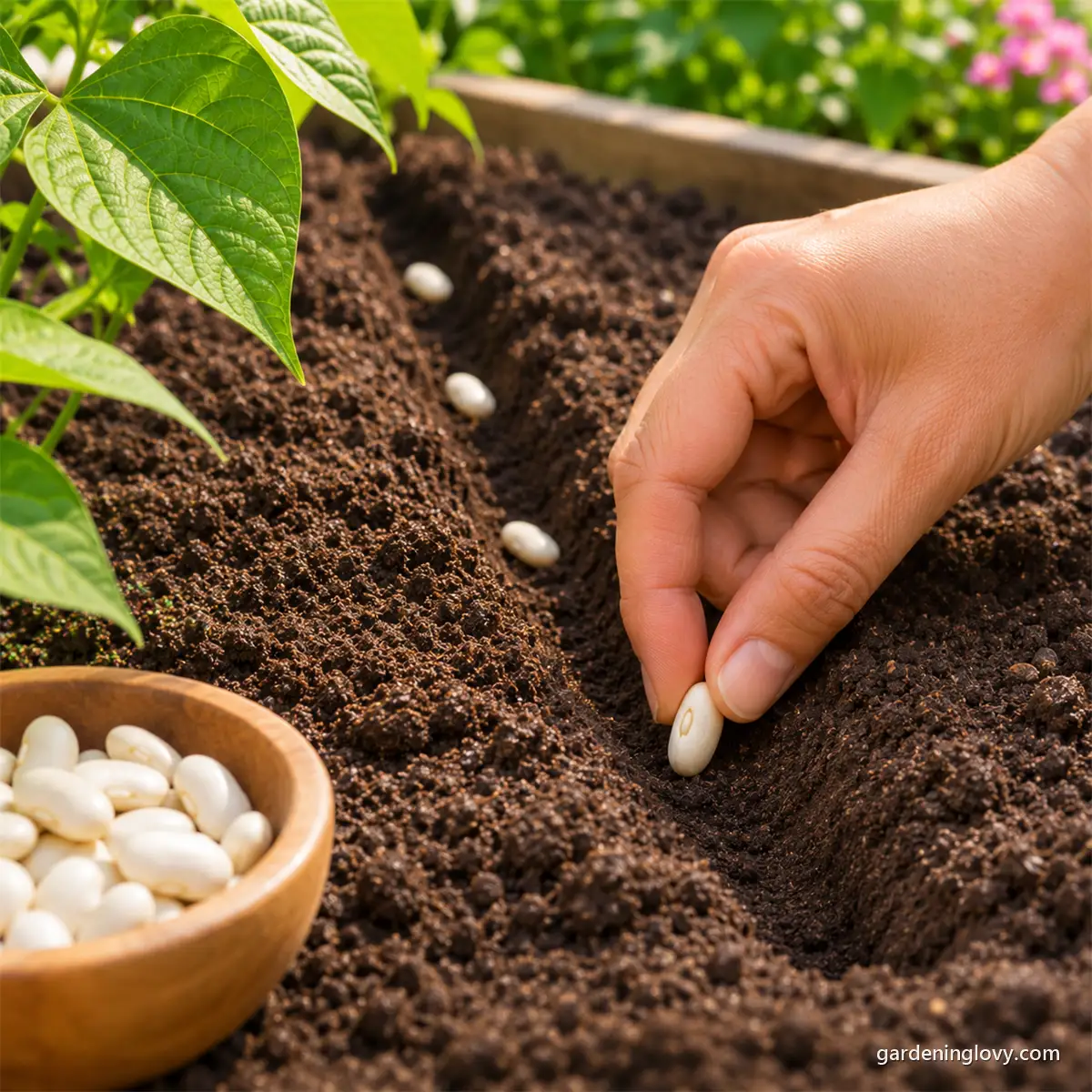
- Sow 1 inch (2.5 cm) deep. Bush beans go 2 to 4 inches apart in rows 18 to 36 inches apart. For pole beans, plant five or six seeds in a circle 6 to 8 inches from each pole.
- Water well once. Then water only when the top inch of soil dries until seedlings appear.
- Thin and protect. Thin crowded seedlings, and cover rows if rabbits or birds pull up the young shoots.
No garden bed? Bush beans grow well in a pot at least 8 to 10 inches deep with drainage holes. Our container gardening basics cover potting mix and watering.
Watering, mulch and care
Beans need about 1 inch (2.5 cm) of water a week, and Clemson calls pod set the critical period for moisture. Water deeply and less often, in the morning, so leaves dry before evening.
A soaker hose along the row keeps water off the leaves, which cuts down on rust and blight.
Once plants are a few inches tall, spread 2 to 4 inches of straw or shredded leaves around them. Mulch holds moisture, keeps roots cool and smothers weeds.
Beans’ shallow roots dislike hoeing, so pull weeds by hand. For good neighbors in the bed, see our best companion plants.
Green beans flowering but no beans? Here’s why
Plenty of flowers and no pods is the most common bean complaint. It’s usually the weather, and it usually fixes itself.
| Cause | Clue | Fix |
|---|---|---|
| Heat | Flowers drop during a run of days above 85–90°F (29–32°C) | Keep watering and mulch; pods set again when it cools |
| Dry or soggy soil | Flowers and tiny pods fall after a dry spell or heavy rain | Water evenly, about an inch a week |
| Too much nitrogen | Big, dark, leafy plants with few flowers | Stop feeding; use compost only next time |
| Old pods left on | Plant slows down once pods mature | Pick every 2–3 days, including the big ones |
Clemson notes that blossom drop above 90°F is common in varieties like Blue Lake 274. The plants start setting pods again when days cool down.
Common green bean problems
| Problem | Signs | What to do |
|---|---|---|
| Seeds rot, gaps in the row | Few or no seedlings after 2 weeks | Resow once the soil is 60°F+ |
| Mexican bean beetle | Lacy, skeletonized leaves; yellow spiny larvae underneath | Hand-pick adults, larvae and yellow egg clusters |
| Aphids | Clusters on new growth, sticky leaves | Blast off with water; encourage ladybugs |
| Rust | Rusty-orange pustules on leaves | Remove affected leaves; water at soil level |
| Bacterial blight, white mold | Water-soaked spots, fuzzy white growth on stems | Space plants for airflow; stay out of the bed when wet |
| Rabbits, groundhogs | Seedlings clipped off cleanly near the ground | Fence or cover young rows |
One habit prevents a lot of disease. UConn advises gardeners to stay out of the garden when plants are wet, because brushing wet leaves spreads bacteria from plant to plant.
For more organic fixes, see our natural garden pest control methods. White powder on leaves late in summer is usually powdery mildew. If animals are the problem, here’s how to keep animals out of raised beds.
When and how to harvest green beans
Start checking about 50 days after sowing. Pick when pods are firm, smooth and about pencil-thick, before you can see the seeds bulging inside. A ready bean snaps cleanly in half.
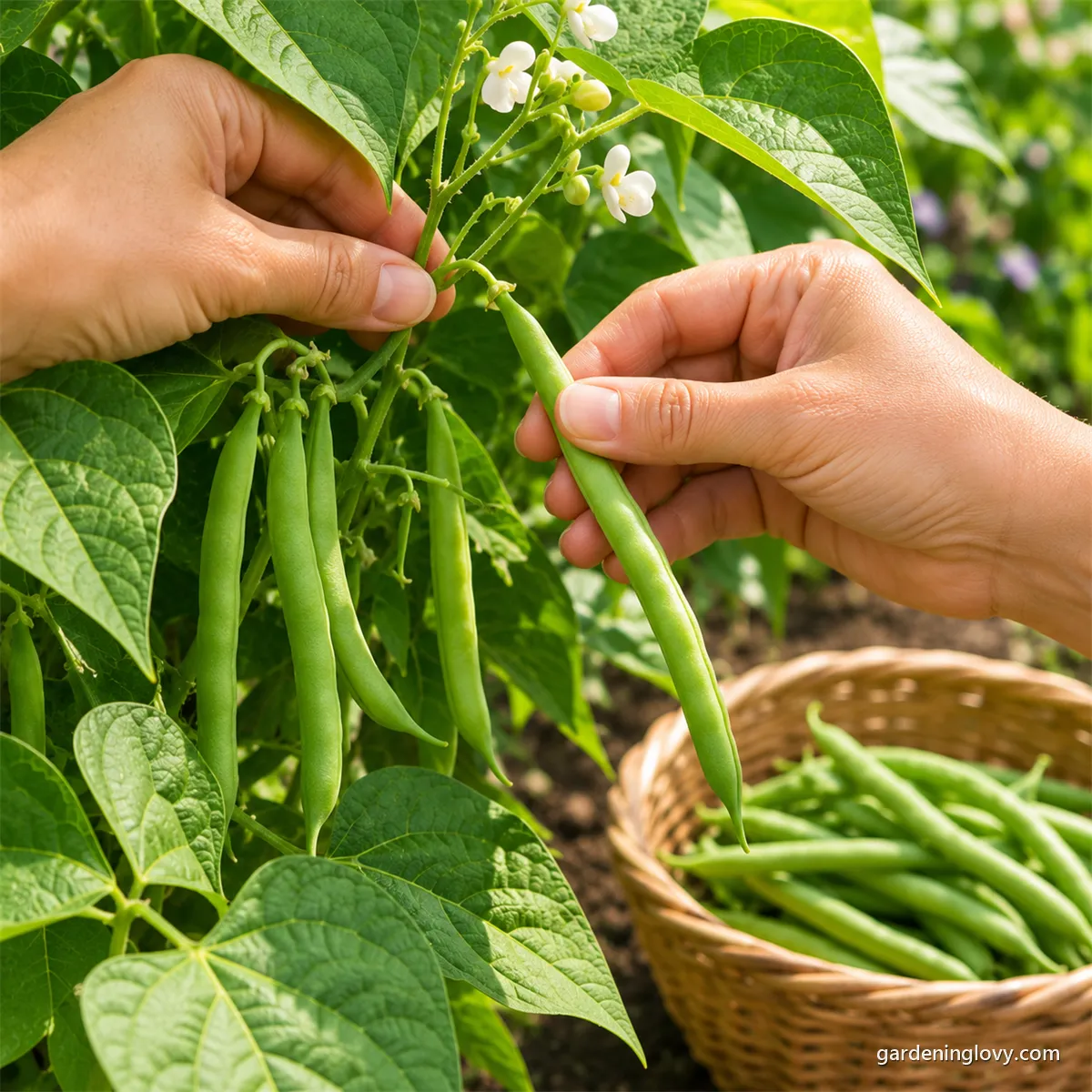
- Pick every 2 to 3 days. Regular picking keeps the plant making new pods.
- Pick in the morning, once leaves are dry, when pods are crisp.
- Chill them fast. Beans are best eaten soon after picking, and keep a few days in the fridge.
5 mistakes that cost you beans
- Sowing into cold soil because the calendar says spring.
- Feeding with high-nitrogen fertilizer, which grows leaves instead of pods.
- Adding pole bean supports after the seedlings are up.
- Watering lightly every day instead of deeply once or twice a week.
- Leaving big, tough pods on the plant, which tells it to stop producing.
Tools that help
Three simple tools cover the jobs above. For netting, look for 6-inch (15 cm) squares, which are big enough to reach through when you pick.
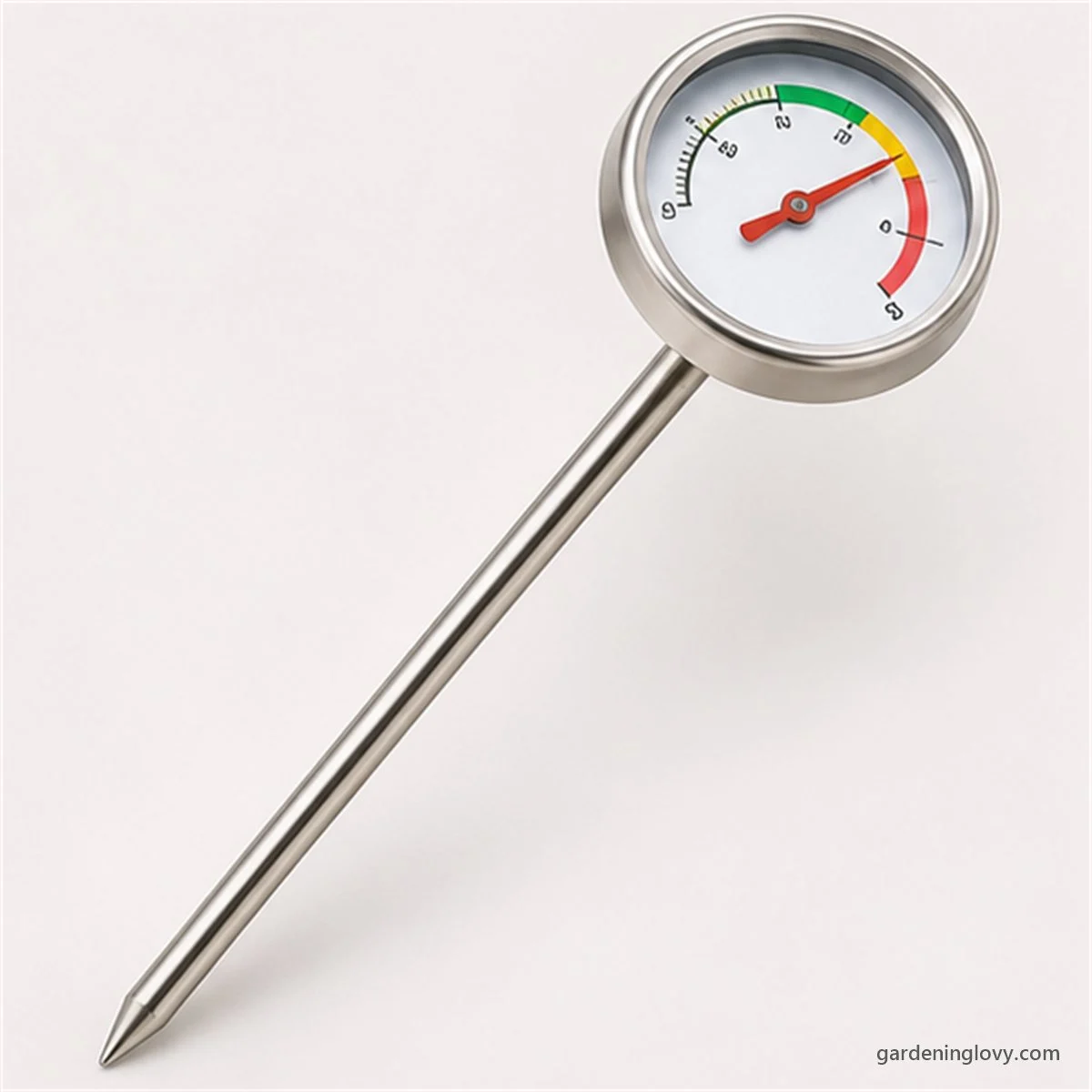
Soil thermometer
Tells you when the soil reaches 60°F, so seeds sprout instead of rotting.
Check price on Amazon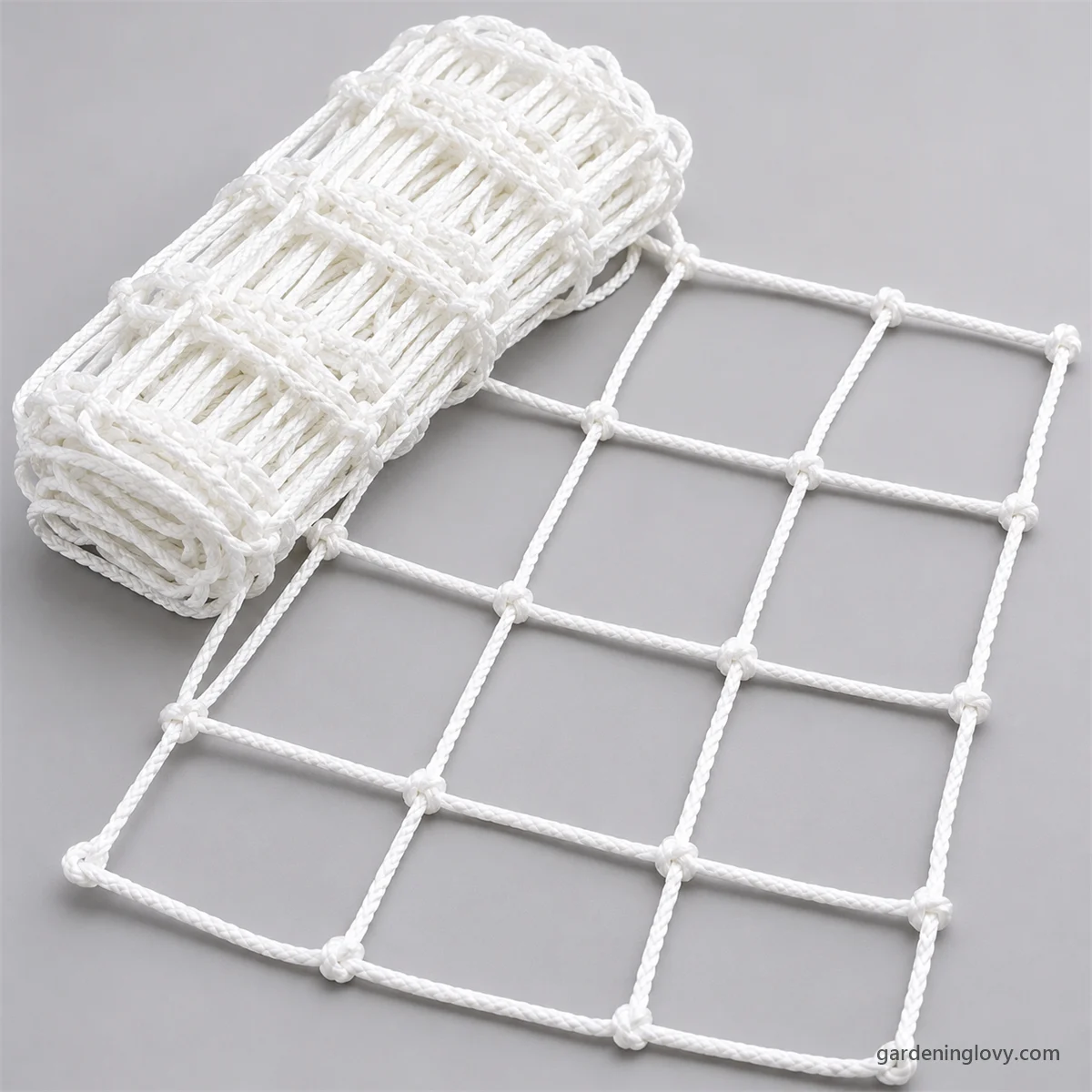
Trellis netting
Stretch between two posts for pole beans to climb. Put it up before sowing.
Check price on Amazon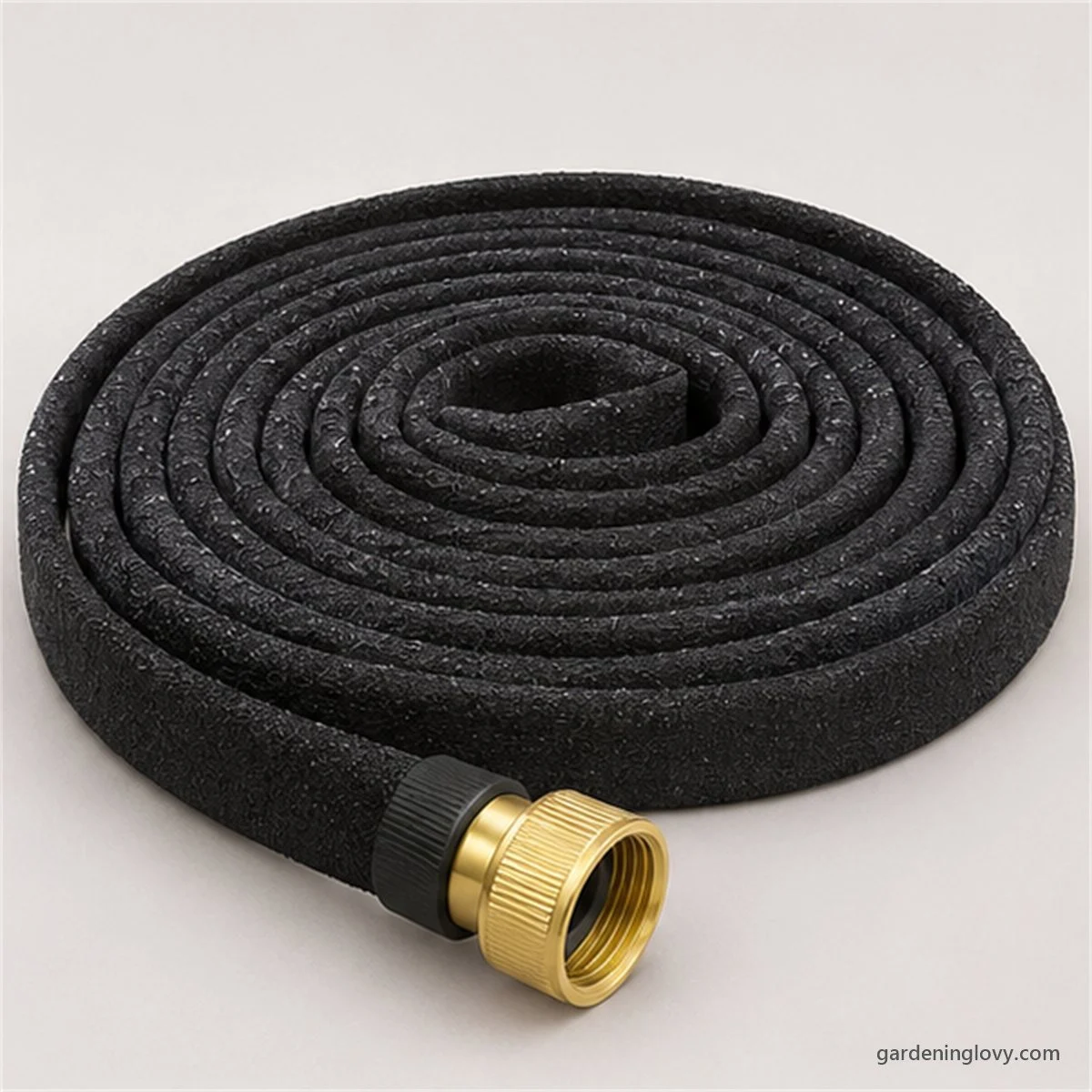
Soaker hose
Waters the root zone and keeps leaves dry, which helps prevent rust and blight.
Check price on AmazonFrequently asked questions
Why are my green bean seeds not coming up?
Cold, wet soil is the usual cause. Bean seeds rot when the soil is below about 60°F (16°C) or waterlogged. Wait for warm soil, sow 1 inch deep and water once after sowing, then only when the top inch dries.
Should I soak bean seeds before planting?
You can. The University of Georgia says soaking seeds overnight in warm water speeds up germination. Plant them the same day, and skip soaking if your soil is already wet or cool, because swollen seeds rot faster in cold ground.
Do green beans need full sun?
They crop best in full sun, at least 6 to 8 hours a day. They tolerate light shade, but expect fewer pods. In very hot climates, a little afternoon shade can help plants hold their flowers.
How long do green bean plants produce?
Bush beans give most of their crop over two to three weeks, so sow a new row every two weeks. Pole beans start later but keep producing until cold weather if you pick them every few days.
Can you grow green beans in pots?
Yes. Bush beans are the easiest choice for containers. Use a pot at least 8 to 10 inches deep with drainage holes, fill it with potting mix, and water more often than beds, since pots dry out fast in summer.
Do green beans need fertilizer?
Only a little. Beans are legumes and need far less nitrogen than most vegetables. Mix compost into the soil before planting and follow a soil test if you have one. Too much nitrogen gives big leafy plants with few pods.
Conclusion
Learning how to grow green beans mostly comes down to timing. Warm soil, steady water and frequent picking do most of the work.
- Sow 1 inch deep once the soil is 60°F (16°C) or warmer.
- Grow bush beans for a quick crop, pole beans for a long one.
- Use compost, not rich fertilizer, and water about an inch a week.
- Pick every 2 to 3 days to keep the pods coming.
If you only do one thing: wait for warm soil before you sow.
Recommended reading
- How to grow black beans
- How to plant tomatoes
- Yellow spots on cucumber leaves
- Vegetables that grow back after harvest

I am an enthusiast who loves plants very much and I do a lot of research online as well as outside in gardens and nurseries. I also strive to be as accurate as possible in my research and my articles. I have been involved in gardening for a long time and truly enjoy it. Read more about me and how I research my guides, or join me on Facebook.