
Cockroaches are among the most unwanted pests around homes and gardens. While gardeners often focus on aphids, beetles, mites, and other plant pests, cockroaches can also appear around compost piles, mulch beds, raised gardens, patios, sheds, and outdoor storage areas.
Many gardeners prefer natural cockroach control methods rather than immediately using strong chemical insecticides around vegetables, herbs, flowers, children, and pets.
That is why one common household ingredient keeps appearing in homemade pest-control advice: baking soda.

But does baking soda kill cockroaches in the garden?
Baking soda and sugar mixtures are widely promoted as homemade cockroach remedies. However, reliable scientific evidence that ordinary baking soda consistently controls cockroach populations is limited.
That does not mean you have to tolerate cockroaches in your garden.
The better approach is to understand why they are there, remove the conditions attracting them, and use proven control methods when necessary.
If you regularly deal with unwanted insects outdoors, learning natural garden pest control methods can also help you choose a more targeted approach instead of treating every garden insect in the same way.
In this guide, we will look at baking soda for cockroaches, 11 practical ways to control outdoor roaches, common mistakes, hiding places, prevention, and safer ways to protect your garden.
Quick Answer: Does Baking Soda Kill Cockroaches?
Baking soda is frequently promoted as a natural cockroach killer, but there is limited reliable evidence that it consistently kills or controls cockroach infestations.
A common homemade recipe combines baking soda with sugar, with the sugar acting as an attractant. However, sanitation, moisture reduction, removing hiding places, monitoring, and appropriately labeled cockroach baits are more dependable approaches.
The first step should therefore be finding out why cockroaches are visiting your garden.
For ongoing control, you can also use enclosed cockroach bait stations in suitable protected areas, especially around sheds, patios, and outdoor storage spaces. Always follow the product label and keep baits away from children and pets.
Baking soda is also used for other gardening purposes, although the method and risks are different for each use. If you grow vegetables, see how baking soda is used for tomato plants before applying it around your garden.
Why Cockroaches Appear in Gardens
Many people assume cockroaches only live inside homes.
In reality, several cockroach species naturally live outdoors.
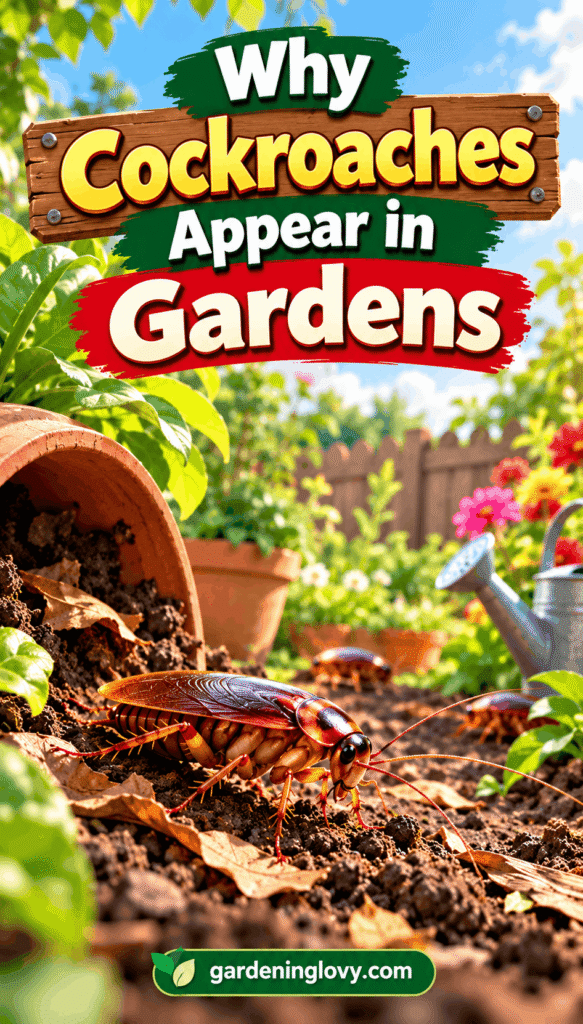
Gardens can provide almost everything they need:
- Food
- Water
- Shelter
- Warmth
- Moisture
- Protection
Common conditions that attract cockroaches include:
- Excess moisture
- Thick mulch
- Decaying organic matter
- Compost piles
- Fallen fruits and vegetables
- Pet food left outdoors
- Dense ground cover
- Garden debris
- Wood piles
- Outdoor storage sheds
- Leaking faucets
- Poorly maintained drainage
Cockroaches are not the only insects attracted to these environments.
For example, if you see insects moving through soil or around garden beds, you may actually be dealing with ants. This guide explains how to manage ants in the garden and distinguish their activity from other garden pests.
Plant-feeding insects can also be mistaken for general garden pests. If leaves are curling or covered with sticky residue and tiny insects, learn where aphids come from and why they appear before applying any treatment.
Correct identification should always come first.
Can Compost Attract Cockroaches?
Yes.
Compost piles can provide food, moisture, darkness, and shelter.
Fresh food scraps left exposed can make the area even more attractive.
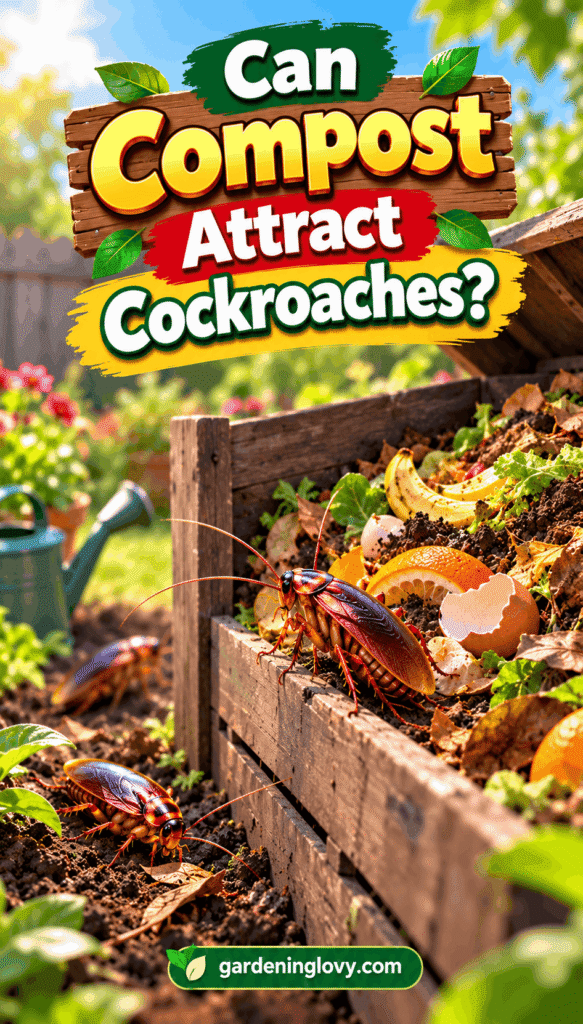
To reduce pest activity:
- Cover fresh scraps with dry compost material.
- Avoid making compost excessively wet.
- Turn the pile when appropriate.
- Remove spilled food around the bin.
- Keep the surrounding area clean.
- Avoid leaving rotting fruit nearby.
If you discover larvae rather than cockroaches in compost or garden soil, you may be looking at another pest entirely. Our guide to identifying and controlling root maggots can help you recognize a different type of garden pest.
Good compost management can often reduce insect activity without requiring unnecessary treatments.
If you are considering adding baking soda around your compost area, first read our guide to using baking soda in compost bins to understand how it can affect the composting environment.
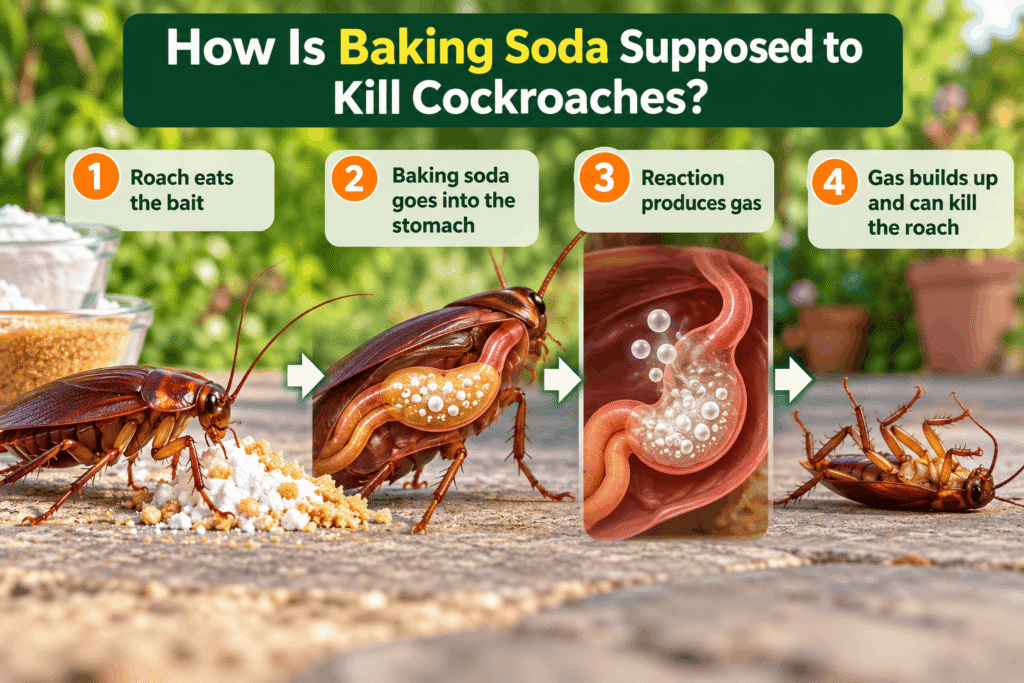
How Is Baking Soda Supposed to Kill Cockroaches?
Baking soda is sodium bicarbonate.
A popular internet explanation claims that when cockroaches eat baking soda, it reacts with substances inside their digestive system and produces gas, eventually killing them.
However, this mechanism should not be presented as an established scientific method for controlling cockroaches.
Reliable pest-management guidance does not generally recommend ordinary household baking soda as a primary cockroach treatment.
Why Is Baking Soda So Popular?
Baking soda remains popular because it is:
| Feature | Why People Use It |
|---|---|
| Affordable | Found in many homes |
| Accessible | Available in most grocery stores |
| Easy to use | Requires little equipment |
| Low odor | No strong pesticide smell |
| Familiar | Common household ingredient |
| Versatile | Used in many homemade remedies |
However, easy availability does not necessarily mean a treatment is effective.
This distinction is important with any homemade garden remedy.
Different pests require different treatments. For example, the correct approach for treating scale insects on plants is very different from managing cockroaches hiding underneath mulch.
Does Baking Soda Work Immediately on Cockroaches?
There is no reliable evidence showing that ordinary baking soda provides immediate or predictable cockroach control.
You may see claims that it works within hours or several days, but these timelines should not be treated as guaranteed results.
If you are seeing cockroaches repeatedly, focus first on where they are hiding and what is attracting them.
That will usually tell you more than simply spreading baking soda around the garden.
11 Ways to Control Cockroaches in the Garden
Here are practical ways to reduce cockroach activity while understanding where baking soda fits into the picture.
1. Be Careful With Baking Soda and Sugar Bait
One of the most common homemade cockroach remedies uses equal quantities of baking soda and sugar.
The idea is simple.
Sugar attracts the cockroach while baking soda supposedly acts as the killing ingredient.
The problem is that this method has not been shown to reliably eliminate cockroach populations.
Sugar can also attract ants.
If you notice increased ant activity after placing sugary homemade bait outside, read our guide to controlling ants around garden beds.
For a significant cockroach problem, properly formulated and appropriately labeled cockroach bait is generally a better choice than experimenting with sugar and baking soda.
2. Avoid Sprinkling Baking Soda Around Plants
Do not assume that more baking soda means better cockroach control.
Scattering large quantities throughout vegetable beds is unnecessary and could introduce excess sodium into the soil.
Instead, determine whether the insects are actually cockroaches.
Tiny insects living directly on plant leaves may be aphids, mites, thrips, whiteflies, or other plant pests.
If you notice small white insects flying from leaves when disturbed, check these home remedies and control methods for whiteflies.
This is another reason pest identification is so important.
3. Keep Compost Areas Clean
Cockroaches may be attracted to compost because it provides organic material and moisture.
Rather than adding baking soda directly to your compost, improve compost management.
Keep food scraps covered.
Balance wet and dry materials.
Clean spilled food from around the bin.
Avoid unnecessary standing water.
Inspect underneath and around the compost container regularly.
If you notice larvae around the compost instead of adult cockroaches, compare what you see with these common signs of root maggots.
4. Inspect Garden Sheds
Garden sheds are excellent hiding places for cockroaches.
They can hide beneath:
- Cardboard boxes
- Pots
- Shelves
- Gardening tools
- Old wood
- Bags of soil
- Storage containers
Remove unnecessary clutter.
Store materials in sealed containers where practical.
Check door thresholds, corners, wall gaps, and areas behind shelving.
Also inspect any plants stored inside.
If you find fine webbing or tiny speckled marks across leaves, the problem may be mites rather than cockroaches. Learn how to identify and get rid of spider mites.
5. Check Under Raised Garden Beds
Raised beds can create cool, dark, and protected areas underneath their structures.
Cockroaches may hide there during daylight hours.
Remove unnecessary debris and inspect damp areas.
If a raised bed remains constantly wet, examine your irrigation habits and drainage.
Excess moisture does not only encourage pests.
It can also damage plant roots.
If plants are showing yellow leaves, soft growth, or consistently wet soil, learn how to save an overwatered plant.
6. Remove Standing Water
Water is one of the most important resources for cockroaches.
Inspect:
- Garden faucets
- Irrigation systems
- Drip lines
- Outdoor sinks
- Plant saucers
- Drainage areas
- Leaking hoses
- Water containers
Repair leaks whenever possible.
Empty unnecessary standing water and improve drainage.
Reducing moisture can make your garden less attractive to cockroaches while also protecting plants from moisture-related problems.
7. Keep Patios and Pavers Clean
Patios and paved areas can accumulate food crumbs, grease, dead leaves, and other organic debris.
Pay special attention to:
- Outdoor dining areas
- Barbecue spaces
- Patio furniture
- Storage containers
- Drainage corners
- Areas underneath planters
Sweep regularly.
Keep garbage containers closed.
Clean food spills quickly.
If cockroaches are repeatedly appearing near doors, check whether they could also be entering the house from the patio.
If green algae is another problem on your outdoor surfaces, you can also learn how to use baking soda to remove algae from concrete safely.
8. Maintain Mulch Properly
Mulch is beneficial for plants.
It helps retain moisture, suppress weeds, and moderate soil temperature.
However, excessively thick or constantly damp mulch can create shelter for cockroaches and other insects.
Maintain a reasonable mulch depth and avoid piling it directly against building foundations.
You do not need to eliminate mulch.
The goal is simply to avoid creating excessively damp hiding places.
9. Improve Greenhouse Hygiene
Greenhouses provide warmth and humidity, two conditions that can support cockroach activity.
Remove dead leaves and plant debris.
Fix leaking irrigation systems.
Improve ventilation.
Keep shelves clean.
Avoid leaving cardboard and unused containers on the floor.
And inspect plants carefully.
If leaves have a white powdery coating rather than visible cockroaches, the problem may actually be fungal. Our guide explains how to get rid of powdery mildew.
10. Organize Outdoor Storage Areas
Outdoor storage containers, firewood, gardening equipment, and unused pots can all provide hiding places.
Keep storage areas organized.
Move unnecessary clutter away from your house.
Store firewood neatly and, where practical, off the ground.
Inspect cardboard boxes before bringing them indoors.
Regular cleaning also makes it easier to detect cockroach activity before populations become difficult to manage.
11. Combine Prevention With Targeted Control
The strongest strategy is not one homemade ingredient.
It is a combination of prevention and targeted treatment.
Your outdoor cockroach control plan should include:
- Moisture reduction
- Food removal
- Compost management
- Debris removal
- Mulch maintenance
- Improved airflow
- Monitoring
- Sealing entry points
- Appropriate cockroach bait where necessary
This gives you a much better long-term strategy than relying on baking soda alone.
What Do Experts Recommend for Outdoor Cockroaches?
According to Texas A&M AgriLife Extension’s outdoor cockroach management guidance, outdoor cockroach management should focus on reducing food, water, and hiding places, sealing openings, monitoring pest activity, and using suitable control methods when needed.
This is why sanitation and habitat reduction are so important.
If your garden continues supplying food, moisture, and shelter, cockroaches may return even after individual insects have been killed.
Common Mistakes to Avoid
Using Too Much Baking Soda
More does not automatically mean better.
Avoid dumping baking soda into garden beds or around sensitive plants.
Applying Homemade Bait in Wet Conditions
Rain can dissolve and wash away baking soda and sugar mixtures.
More importantly, repeated rain or irrigation may indicate that moisture itself is helping create favorable cockroach habitat.
Ignoring Moisture Problems
Fix leaking hoses and faucets.
Improve drainage.
Avoid leaving standing water around patios and sheds.
Leaving Food Available
Remove:
- Fallen fruit
- Pet food
- Food scraps
- Open garbage
- Spilled compost materials
Cockroaches may continue visiting your garden as long as easy food remains available.
Treating Every Pest the Same Way
Cockroaches, aphids, whiteflies, mites, beetles, and scale insects are different pests.
They should not automatically receive the same treatment.
For example, if your plants are being damaged by beetles rather than cockroaches, explore these ways to prevent Japanese beetles.
Where Do Cockroaches Hide in Gardens?
Understanding hiding locations can make control much easier.
| Location | Why It Attracts Cockroaches | What to Do |
|---|---|---|
| Compost piles | Food and moisture | Cover scraps and manage moisture |
| Mulch beds | Shelter and humidity | Avoid excessive mulch |
| Wood piles | Dark protected areas | Store wood neatly |
| Under stones | Cool shelter | Remove unnecessary debris |
| Garden borders | Dense vegetation | Maintain regularly |
| Drainage areas | Moisture | Improve drainage |
| Outdoor furniture | Protected gaps | Clean and inspect |
| Garden sheds | Darkness and clutter | Organize and seal gaps |
| Raised beds | Cool protected areas | Inspect underneath |
Remember that some cockroach species naturally live outdoors.
Seeing one cockroach does not automatically mean your garden has a serious infestation.
Signs of a Garden Cockroach Problem
Watch for:
- Frequent cockroach sightings at night
- Cockroaches hiding beneath containers
- Droppings resembling dark specks
- Egg cases
- Repeated activity near compost
- Cockroaches around sheds
- Increased activity around drains
- Cockroaches entering nearby buildings
Repeated sightings are more concerning than finding a single outdoor cockroach.
How to Confirm Cockroach Activity
Sticky monitoring traps can help identify areas where cockroaches are active.
Simple cockroach sticky monitoring traps can help you identify where roaches are hiding and whether their numbers are increasing or decreasing.
Place traps in dry, protected locations along walls or near suspected hiding areas.
Check them regularly.
Monitoring can tell you whether cockroach numbers are increasing or decreasing and where additional attention is needed.
Additional Natural Cockroach Control Methods
Baking soda should never be your entire pest-management strategy.
Remove Standing Water
Eliminate:
- Leaking hoses
- Water-filled containers
- Puddles
- Poor drainage
- Unnecessary plant saucers
Improve Air Circulation
Trim excessively dense vegetation when appropriate.
Improve airflow through sheds and greenhouses.
Less humidity means fewer attractive hiding areas.
Reduce Excessive Mulch
Keep mulch at an appropriate depth rather than allowing thick, constantly damp layers to develop.
Clean Garden Debris
Remove:
- Dead leaves
- Rotting vegetation
- Old boards
- Unused containers
- Fallen fruit
Seal Garden Structures
Repair gaps around:
- Sheds
- Storage boxes
- Greenhouses
- Doors
- Foundations
- Pipes
Encourage a Balanced Garden Ecosystem
Birds, toads, lizards, and some predatory insects may feed on cockroaches and other garden pests.
A diverse garden ecosystem can support natural pest regulation.
However, predators alone should not be expected to control a severe infestation.
Is Baking Soda Safe Around Plants?
Small, targeted amounts are different from repeatedly spreading large quantities through garden soil.
Baking soda contains sodium.
Excessive use may negatively affect soil conditions or sensitive plants.
For safer use:
- Avoid heavy soil applications.
- Do not dump baking soda around plant roots.
- Keep concentrated amounts away from sensitive plants.
- Avoid unnecessary applications around edible crops.
- Focus on removing cockroach habitat instead.
If you are adding anything to garden soil, make sure the amendment actually addresses a plant or soil need rather than applying household products unnecessarily.
Is Baking Soda Safe Around Pets?
Baking soda may appear harmless because it is a household ingredient, but large amounts should not be consumed by pets.
Sugar-based homemade baits may also attract animals.
Keep all pest-control materials inaccessible to:
- Dogs
- Cats
- Poultry
- Children
If you use commercial bait stations, follow the product label carefully.
Natural does not automatically mean harmless.
How Long Does It Take to Get Rid of Cockroaches Outside?
There is no reliable timeline for eliminating cockroaches with baking soda.
The time required to reduce outdoor cockroach activity depends on:
- Cockroach species
- Population size
- Food availability
- Moisture
- Shelter
- Nearby breeding sites
- Control methods used
You can begin sanitation and moisture reduction immediately.
More established problems may require ongoing monitoring and targeted treatment.
If pet food or bird feed is stored outdoors, transfer it to an airtight pest-resistant storage container rather than leaving food in open bags. Reducing easy food sources can make sheds and patios less attractive to cockroaches.
How to Prevent Cockroaches From Returning
Prevention is usually easier than repeatedly treating cockroaches.
Follow these habits:
- Keep compost properly managed.
- Remove fallen fruit and food scraps.
- Repair leaking hoses and faucets.
- Reduce standing water.
- Maintain mulch appropriately.
- Keep sheds organized.
- Seal cracks and gaps.
- Store pet food securely.
- Clean patios and outdoor dining areas.
- Monitor recurring cockroach activity.
These practices also make your garden less inviting to many other unwanted pests.
Frequently Asked Questions
Does baking soda kill cockroaches in the garden?
Baking soda is widely promoted as a homemade cockroach remedy, but reliable scientific evidence that it consistently kills or controls cockroaches is limited.
Sanitation, moisture reduction, monitoring, exclusion, and appropriate bait products are more dependable approaches.
Does baking soda and sugar kill cockroaches?
Baking soda and sugar is a popular homemade mixture, but it should not be considered a proven cockroach treatment. Sugar can also attract ants and other insects.
Can I sprinkle baking soda directly on cockroaches?
Sprinkling baking soda directly on cockroaches is not a proven control method.
What attracts cockroaches to a garden?
Food, moisture, compost, fallen fruit, thick mulch, garden debris, wood piles, pet food, and protected hiding places can all attract outdoor cockroaches.
Does rain reduce the effectiveness of baking soda?
Baking soda dissolves in water and can be washed away. However, keeping it dry does not make it a scientifically proven cockroach treatment.
Is baking soda better than chemical insecticides?
Baking soda may seem more natural, but natural does not necessarily mean effective.
Properly labeled cockroach baits and integrated pest-management practices have better support for controlling infestations.
Can baking soda prevent cockroaches?
Baking soda is not a dependable cockroach repellent. Removing food, water, shelter, and entry points is a better prevention strategy.
Can baking soda harm vegetable gardens?
Excessive use may add unnecessary sodium to garden soil. Avoid repeatedly spreading large quantities around vegetables or other sensitive plants.
What is the best natural way to keep cockroaches out of the garden?
Reduce moisture, remove exposed food, manage compost, clean garden debris, maintain mulch properly, and eliminate unnecessary hiding places.
Do cockroaches damage garden plants?
Most outdoor cockroaches primarily feed on decaying organic matter and available food rather than behaving like major plant pests.
Correct identification is important if leaves are being damaged.
Recommended Blogs
If you’re dealing with cockroaches and other unwanted garden pests, these GardeningLovy guides may also help:
- Where Do Aphids Come From?
- How to Get Rid of Spider Mites
- How to Prevent Japanese Beetles
- How to Get Rid of Powdery Mildew
- How to Save an Overwatered Plant
- How to Use Baking Soda to Remove Algae From Concrete
Final Thoughts
So, does baking soda kill cockroaches in the garden?
Baking soda is one of the most widely shared homemade cockroach remedies, but there is not enough reliable evidence to consider it a dependable solution for controlling outdoor cockroaches.
Instead of relying on baking soda alone, find out why cockroaches are visiting your garden.
Look for moisture.
Inspect mulch and compost.
Remove exposed food.
Clean sheds and patios.
Reduce clutter.
Seal entry points.
And monitor areas where cockroaches repeatedly appear.
The most effective strategy is not finding one miracle ingredient.
It is making your garden less attractive to cockroaches in the first place.
A cleaner, drier, well-maintained garden with fewer food sources and hiding places gives cockroaches fewer reasons to stay.

I am an enthusiast who loves plants very much and I do a lot of research online as well as outside in gardens and nurseries. I also strive to be as accurate as possible in my research and my articles. I have been involved in gardening for a long time and truly enjoy it. Know more about me About. You can also join me Here.