
Companion planting is not a trend or a decorative gardening idea. It is a practical system based on how plants naturally support one another when grown in mixed environments.
In nature, vegetables, herbs, flowers, and ground-cover plants do not grow alone in straight rows. They grow together, interact through roots and scent, and create balance in soil, insects, and airflow.
Many home gardens struggle not because of poor soil or lack of effort, but because plants are placed randomly wherever space is available.
Over time, this leads to weak growth, repeated pest attacks, nutrient competition, and poor harvests. Companion planting helps solve these problems naturally by placing the right plants next to the right neighbors.
This detailed guide explains the best companion plants, what grows better together, which combinations to avoid, and how to apply companion planting in small gardens, raised beds, containers, and balconies.
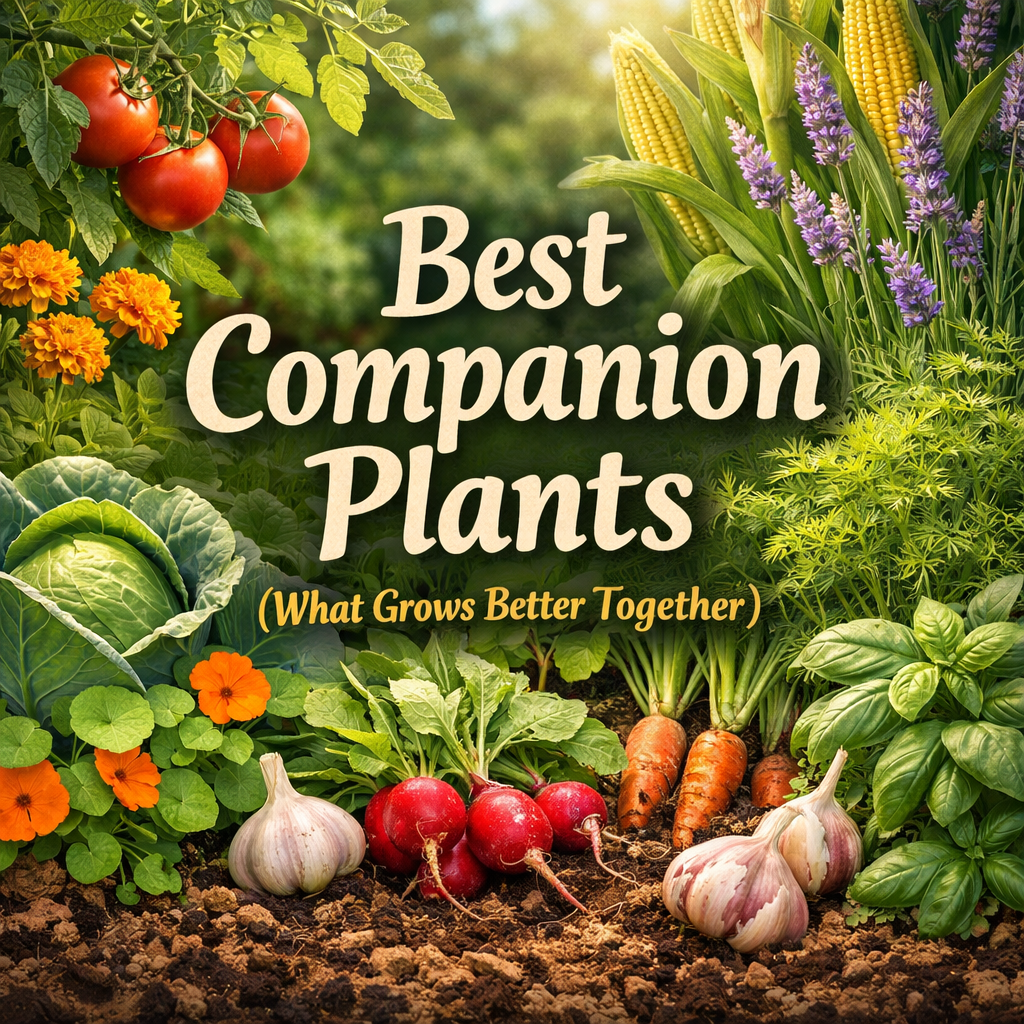
What Companion Planting Actually Means
Companion planting means growing plants close together so they benefit each other instead of competing.
These benefits may be visible immediately, such as fewer pests, or they may build slowly, such as improved soil structure and stronger root systems.
Plants interact through:
- scent compounds released from leaves
- chemical signals released by roots
- microbes living in the soil around roots
Some plants repel pests. Others attract beneficial insects. Some loosen soil. Others fix nitrogen. When combined correctly, these effects create a healthier mini-ecosystem.
Before using companion planting methods, understanding spacing and container size is important, especially for small gardens.
Following container gardening basics for beginners helps avoid overcrowding and root stress that can cancel out companion benefits.
Why Companion Planting Works So Well
In single-crop gardens, pests find food easily and multiply fast. Diseases spread rapidly because all plants react the same way. Soil nutrients are exhausted unevenly.
In mixed plantings:
- pests struggle to locate host plants
- beneficial insects remain longer
- root systems use nutrients efficiently
- soil microbes become more balanced
Companion planting does not eliminate every problem, but it reduces pressure, allowing plants to stay strong enough to grow, recover, and produce consistently.
Best Companion Plants for Tomatoes

Tomatoes are heavy feeders and attract many pests, making companions extremely useful.
1. Tomato companion plants that work best
Basil
Basil helps confuse insect pests and many gardeners observe healthier tomato growth when basil is planted nearby.
Marigolds
Marigolds help protect tomato roots and reduce soil pest activity.
Garlic and onions
Strong scent plants disrupt aphids, mites, and other insects.
Lettuce and spinach
Shallow-rooted greens grow well in the partial shade beneath tomato plants without competing deeply for nutrients.
When spinach is planted under tomatoes, it is important to harvest correctly. Using how to harvest spinach so it keeps growing allows multiple harvests without stopping regrowth.
For container tomatoes, drainage is critical. Many gardeners use fabric grow bags for vegetables because they prevent waterlogged roots and improve airflow.
Avoid planting tomatoes near
- potatoes
- fennel
- densely packed cabbage family crops
Best Companion Plants for Cucumbers

Cucumbers grow quickly but suffer easily from pests and water stress.
2. Cucumber companions that support growth
Beans
Beans help improve soil nitrogen levels.
Dill
Attracts beneficial insects that prey on aphids and beetles.
Marigolds
Help reduce pest pressure near cucumber roots.
Nasturtiums
Act as trap crops that pull pests away from cucumbers.
Cucumber success depends heavily on watering habits. Companion planting works best when combined with proper irrigation explained in how often to water cucumbers.
Avoid planting cucumbers with
- potatoes
- very woody herbs planted too close
Best Companion Plants for Carrots

Carrots grow underground, so companions help mainly by protecting foliage and improving soil conditions.
3. Good companion plants for carrots
Onions and green onions
Mask carrot scent and reduce carrot fly damage.
Leeks
Offer similar protective effects.
Radishes
Loosen soil and grow quickly, freeing space early.
Lettuce
Shallow roots and fast harvest prevent competition.
Carrot quality depends on loose soil. Adding organic matter using how to make compost at home naturally helps prevent forked or stunted carrots.
Avoid overcrowding carrots or planting dill directly beside them.
Best Companion Plants for Spinach and Leafy Greens
Spinach grows best in cool conditions with even moisture.
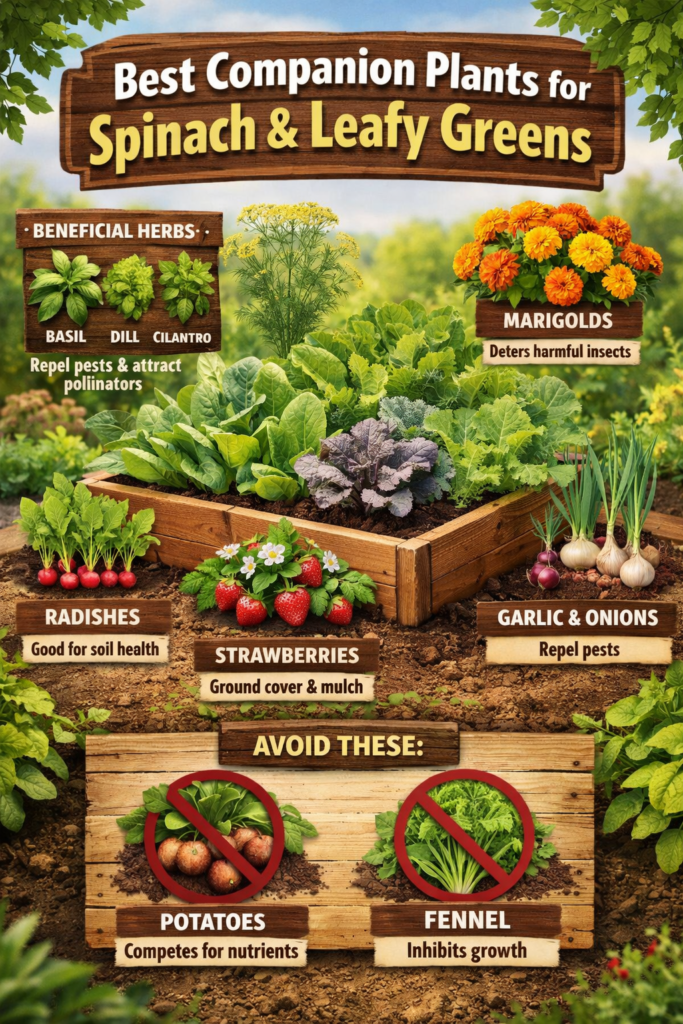
4. Spinach companion plants
Radishes
Fast harvest creates more space.
Peas
Support soil nitrogen and enjoy similar temperatures.
Strawberries
May provide light shade in some layouts.
Gardeners who want longer harvest periods follow how to grow perpetual spinach along with correct cutting practices.
Proper spacing is equally important, especially in tight gardens, which is why growing leafy greens in small spaces is so useful.
Best Companion Plants for Peppers
Peppers require warmth but are sensitive to pests and stress.
5. Pepper companion plants
Basil
Helps repel insects and supports plant vigor.
Onions
Reduce pest activity.
Marigolds
Encourage beneficial insects.
Lettuce
Uses shaded soil efficiently beneath pepper plants. Avoid fennel and overcrowded brassicas near peppers.
Companion Plants for Brassicas (Cabbage Family)
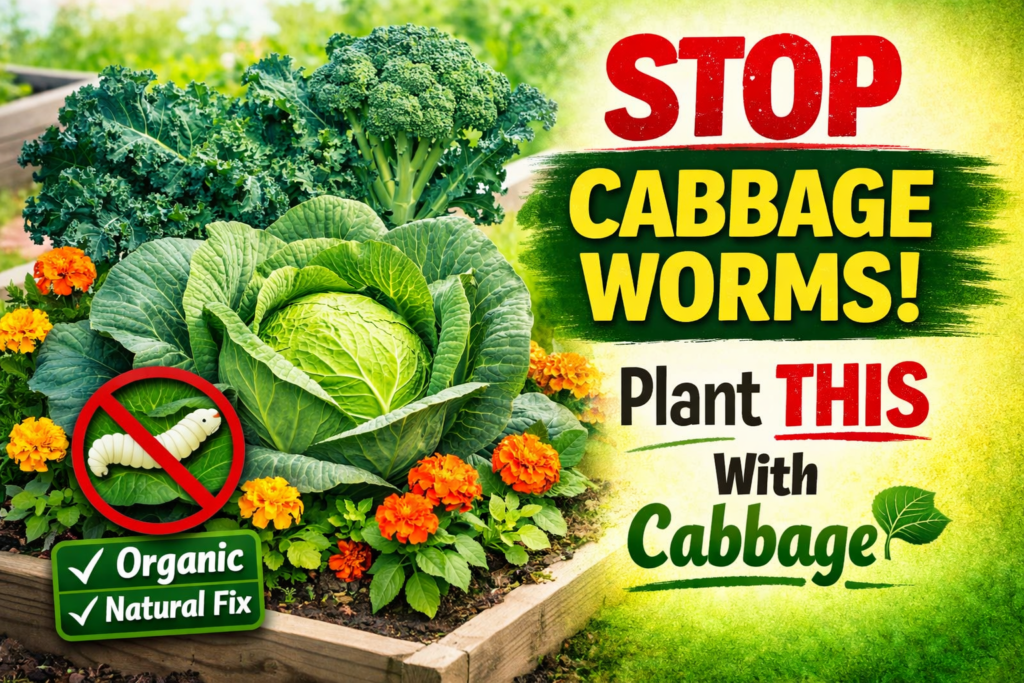
Cabbage, broccoli, cauliflower, and kale attract pests like caterpillars and aphids.
6. Effective brassica companions
Garlic and onions
Disrupt pest attraction.
Dill
Attracts beneficial insects that control caterpillars.
Nasturtiums
Function as trap crops.
Chamomile
Traditionally associated with stronger brassica growth.
Spacing matters greatly. Following square foot gardening kale helps improve airflow and reduce disease pressure.
Herbs as Powerful Companion Plants
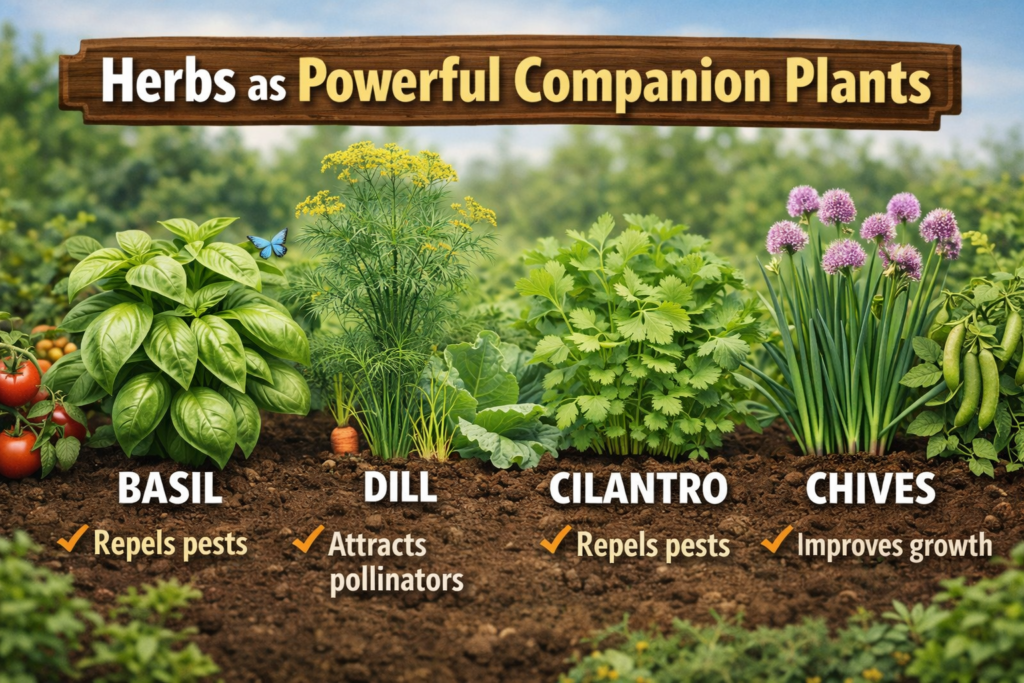
Herbs are small, versatile, and highly effective companions.
7. Useful companion herbs
- Basil – tomatoes, peppers
- Mint – pest deterrent (grow in containers only)
- Dill – cucumbers, brassicas
- Cilantro – attracts beneficial insects
Herbs must be pruned correctly to stay productive. Using herb pruning techniques keeps plants bushy.
Clean cuts matter, which is why many gardeners prefer a stainless steel hand pruner.
Flower Companions That Support Vegetables
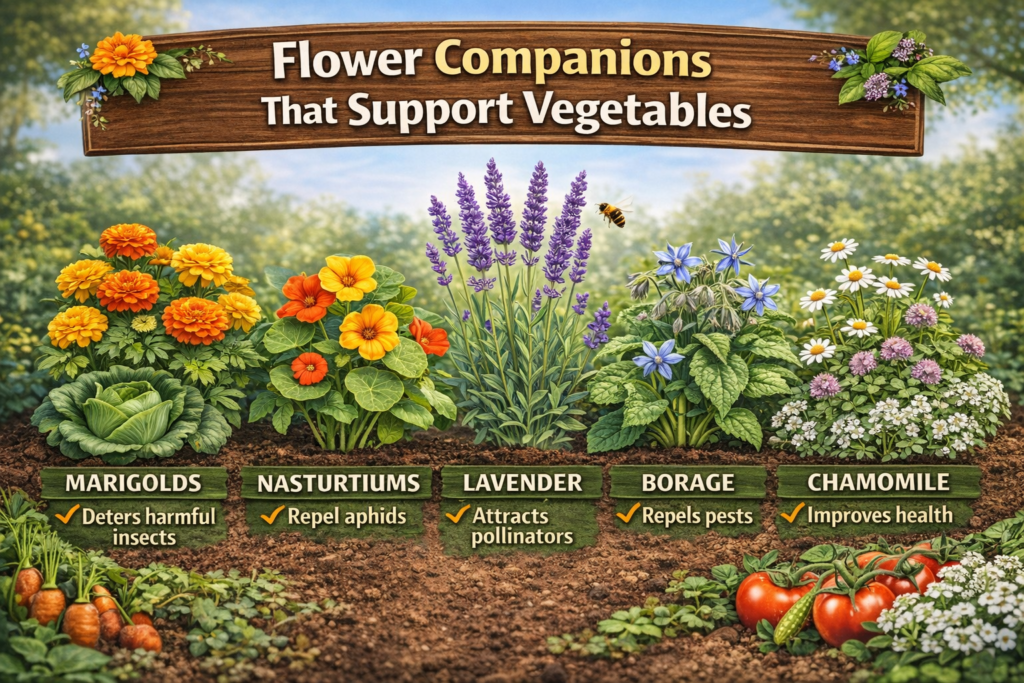
Flowers play an important functional role in companion planting.
- Marigolds protect soil and roots.
- Nasturtiums lure pests away from vegetables.
- Calendula attracts pollinators and beneficial insects.
Plant flowers along bed edges, between crops, or in nearby containers.
The Three Sisters Companion Planting System
This traditional system combines:
- corn for vertical support
- beans for nitrogen fixation
- squash for ground cover
Together, these plants conserve moisture, suppress weeds, and support soil health. It works best in large beds but can be adapted to smaller gardens using compact varieties.
Companion Planting in Containers and Balcony Gardens
Companion planting works in containers when plant needs align.
Important rules:
- containers must be large enough
- water requirements must match
- sunlight exposure must be similar
Good container combinations include tomato with basil, spinach with radish, and pepper with lettuce.
Balcony gardeners should plan layout carefully using how to set up garden in apartment balcony. Indoor growers can still apply principles using indoor vegetable gardening ideas.
Common Companion Planting Mistakes
- overcrowding plants
- pairing two heavy feeders
- ignoring water differences
- harvesting incorrectly
- failing to observe plant response
Companion planting requires observation and adjustment.
Seasonal Companion Planting (How Pairings Change by Weather)
One common mistake gardeners make is assuming companion planting works the same way all year. In reality, seasons change how plants interact.
Temperature, daylight length, and soil moisture all affect how companions behave.
Cool-season companion planting
Cool-season crops grow best when temperatures are mild. During this time, the goal of companion planting is:
- retaining soil moisture
- avoiding heat stress
- supporting slow early growth
Best cool-season companion strategies include:
- pairing spinach with radish so radish harvest frees space early
- growing peas near leafy greens to support soil nitrogen
- planting lettuce around taller crops to reduce cold wind stress
Cool-season gardens benefit greatly from proper spacing. Many gardeners unknowingly overcrowd early crops, leading to fungal disease.
Using guidance from growing leafy greens in small spaces helps prevent this mistake.
Warm-season companion planting
Warm-season crops face different challenges:
- high heat
- fast pest reproduction
- soil drying
Here, companions focus on:
- pest confusion
- shade creation
- moisture retention
Examples include:
- growing basil and marigolds near tomatoes during peak summer
- using lettuce beneath peppers to shade soil
- planting flowers along borders to keep pollinators active
In summer containers, breathable soil and drainage matter more.
This is why fabric grow bags for vegetables are especially useful during hot months—they prevent root overheating and waterlogging.
Companion Planting for Pest Control (Without Chemicals)
One of the biggest reasons gardeners adopt companion planting is to reduce pesticide use. While no plant completely eliminates pests, smart pairings dramatically reduce infestations.
How companion plants reduce pests
Companion plants work through:
- scent masking (confusing insects)
- attracting predator insects
- redirecting pests to trap plants
For example:
- nasturtiums pull aphids away from cucumbers
- dill attracts insects that eat caterpillars
- onions make it harder for pests to locate carrots
Pest pressure also depends on plant health. Weak plants attract more insects.
Healthy soil created through how to make compost at home naturally strengthens plants from the root up, making companion planting far more effective.
Companion Planting for Soil Health and Nutrient Balance
Companion planting is not only about pests—it is also a soil strategy.
Different plants extract nutrients from different soil depths. When the same crop grows repeatedly in one spot, soil becomes depleted.
Companion planting spreads nutrient demand more evenly.
Examples of nutrient-smart pairings
- beans with heavy feeders like cucumbers or tomatoes
- leafy greens with root crops
- herbs with vegetables that need less nitrogen
Soil benefits improve over time. Gardens that consistently use companion planting often need less fertilizer because soil life becomes more active and balanced.
To maintain this balance, seasonal compost additions using how to make compost at home naturally ensure nutrients remain available without chemical overload.
Companion Planting in Raised Beds vs Containers
Companion planting principles stay the same, but application changes by garden type.
Raised beds
Raised beds allow:
- better root expansion
- easier spacing control
- stronger companion effects
In raised beds:
- use wider spacing for heavy feeders
- plant flowers along edges
- place shallow crops between deep-rooted ones
Raised bed gardeners growing kale benefit from spacing guidance in square foot gardening kale, especially when combining brassicas with companions.
Containers and pots
Containers restrict root space, so companion choices must be careful.
Good container companion rules:
- pair one main crop with one helper plant
- avoid two heavy feeders in one pot
- match watering needs
For beginners, reviewing container gardening basics for beginners before mixing plants prevents most container failures.
Companion Planting for Pollination and Higher Yield
Companion planting also improves fruit set, especially for crops like tomatoes, cucumbers, squash, and peppers.
Flowers such as marigold and calendula keep pollinators active inside the garden. Herbs like cilantro and dill flower quickly and provide continuous nectar sources.
Gardens with diverse companions often produce:
- better fruit shape
- fuller harvests
- fewer aborted flowers
This benefit becomes especially important in urban and balcony gardens where pollinators are limited.
In such spaces, following how to set up garden in apartment balcony while adding flowering companions significantly improves results.
Companion Planting by Plant Family (Avoiding Hidden Conflicts)
Many companion planting failures happen when gardeners unknowingly place plants from the same family too close together.
Plants in the same family:
- attract the same pests
- compete for the same nutrients
- increase disease risk
Examples:
- tomatoes and potatoes (both nightshades)
- cabbage and broccoli planted repeatedly together
- peppers crowded beside tomatoes in small spaces
Rotating plant families and pairing with herbs or flowers instead keeps soil balanced and pests under control.
Long-Term Companion Planting Strategy (Year After Year)
Companion planting works best when used as a long-term system, not a one-time experiment.
Over multiple seasons:
- soil structure improves
- pest populations stabilize
- plant resilience increases
Gardeners who follow seasonal companions, add organic matter, and observe plant behavior end up with gardens that need:
- less fertilizer
- fewer sprays
- less constant intervention
Indoor gardeners can also use simplified companion concepts through indoor vegetable gardening ideas, especially with herbs and leafy greens.
Scientific Support for Companion Planting
Research shows that plant diversity improves pest control and garden resilience.
Guidance from Colorado State University Extension supports diverse planting systems as part of integrated home gardening.
Final Thoughts
Companion planting is about cooperation, not control. When plants support each other, gardens become healthier, easier to maintain, and more productive.
Start with simple combinations. Observe results. Adjust spacing. Expand gradually.
Grow together, and your garden will thrive naturally.

I am an enthusiast who loves plants very much and I do a lot of research online as well as outside in gardens and nurseries. I also strive to be as accurate as possible in my research and my articles. I have been involved in gardening for a long time and truly enjoy it. Know more about me About. You can also join me Here.