
The bay tree is a large aromatic shrub with smooth green leaves. They are attractive and have shiny foliage. Typically, a bay tree can grow up to 20 or 30 feet tall.
Although pruning a bay tree is not strictly necessary, you can limit its growth and turn it into a manageable shape. Before pruning bay Tree, some questions may come to your mind, such as:
For Pruning Bay Tree, If the height does not bother you, and the tree is entirely healthy, there is no need to prune it.
But if one of these reasons appears, you should prune immediately. A large bay tree can withstand very hard pruning, no matter which trunk you cut. Even they can resist cutting the main trunk.
This article will help you to get the answers and understand clearly about pruning bay tree leaf techniques, dos, and don’ts.
Quick Answer
Quick Answer: Pruning a bay tree helps control its size, improve airflow, encourage dense new growth, and keep the tree healthy. The best time for bay tree pruning is late spring to early summer after the risk of frost has passed. Whether you’re pruning a bay laurel, shaping a lollipop tree, or reducing an overgrown bay tree, always remove dead, damaged, and crossing branches first.
Also, read below gardening tips.
- How To Plant Tomatoes [Quick & Easy 21+ Ways]- Beginners Guide
- How To Grow Brussels Sprouts (16+ Step-by-Step Beginners Pro Guide)
- How To Grow Mint Indoors Quick | Exclusive (#11+) Ideas To Try
Expert Tip
Rather than giving your bay tree one heavy trim every year, prune it little and often. Removing a few older branches annually improves light penetration and air circulation while encouraging dense, healthy new growth. This approach also reduces stress on mature trees and helps maintain their natural shape.
When to Prune a Bay Tree
The best time to prune is late spring to early summer, once the risk of frost has passed. Light shaping can continue through summer, but avoid major pruning late in the year because tender new growth may be damaged by cold weather.
For UK gardens, late May through July is usually a practical pruning window, depending on local conditions.
| Season | Recommendation |
|---|---|
| Spring | Best time |
| Early Summer | Excellent |
| Autumn | Light pruning only |
| Winter | Avoid |
Managing an Overgrown Bay Tree
An overgrown bay tree can usually be brought back under control without cutting it down completely. Start by removing dead, damaged, and crossing branches. Then reduce the height and width gradually, taking no more than about one-third of the canopy at a time.
If the tree is very large, spread the work across two or three growing seasons. This gives the plant time to recover and usually produces healthier regrowth.
Bay Tree Suckers and Root Shoots
Bay trees often produce shoots from the base or nearby roots. These suckers can make the plant look untidy and compete with the main tree.
Remove them as close to their point of origin as possible. Check around the base regularly, especially after heavy pruning, because new shoots may appear more vigorously after the canopy is reduced.
My Experience
In my experience, bay trees recover much better from gradual pruning than from severe cutting in a single season. I’ve found that removing damaged wood first and then lightly shaping the canopy each year keeps the tree healthier, easier to manage, and less likely to produce excessive suckers.
Tools You’ll Need for Pruning a Bay Tree
- Sharp bypass secateurs
- Loppers for thick branches
- Pruning saw
- Gardening gloves
- Disinfectant to clean blades
- Garden twine (for shaping topiary)
Before You Prune Your Bay Tree
- Check that frost has passed.
- Use clean, sharp tools.
- Remove dead or diseased branches first.
- Decide on the final shape.
- Never remove more than one-third of the canopy.
- Water the tree if the soil is very dry.
What Are The Best Ways For Pruning Bay Tree With Large Shape?
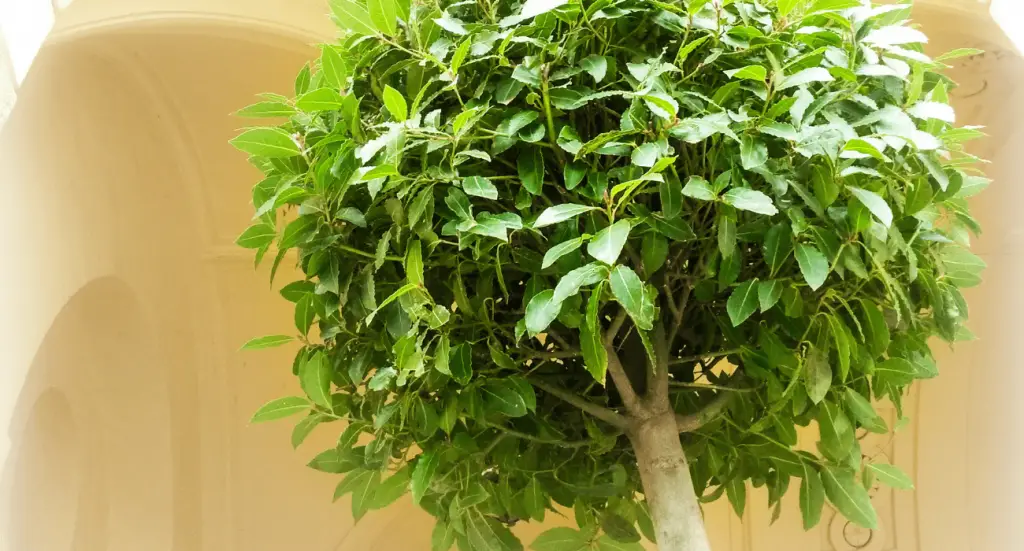
Generally, a bay tree can grow to 30 feet if you do not prune it. If you are okay with this size, you should not prune the tree. But if you do not want this height, you can prune it as they accept severe pruning.
Even if you prune them into topiary shapes. But there are various reasons behind pruning a bay tree. Usually, the main reasons behind pruning a large bay tree are:
- The height
- Disease
- Suckers
Like other trees, you should cut bay trees in the late spring. Pruning a tree in a dry period is better. First, you should study your tree and the environment around it.
Then it would help if you determined the shape. Which look do you want for your tree? After deciding the shape, you should choose the method as there are two ways to prune a bay bush.
- Multi trunk bushes
- Single trunk bush
You can convert your bay tree into a single-trunked tree or multi-trunk bushes. You can also hire a skilled pruner because they can elaborate on topiary designs with bay trees.
For pruning a large tree, you should trim away damaged leaves. If you want to limit the height, trim the top of the bay as you wish.
For pruning bay trees, Remove the trunks that you do not want at the bottom. If you are pruning the tree for the first time.
You should prune a quarter of the tree in the first year, and then you should prune a less portion in the next year.
Finally, you should cut your tree into a tidy shape in the third year, and this pruning will give the tree its final appearance. For cutting branches that are greater than one inch, you can use loppers.
Also, find below the pruning guide.
- How To Prune Mountain Laurel (21 Pro Ways)- Step By Step
- (21 Exclusive Ways) How To Prune Grape Vines -Beginners Guide
- How + When To Prune Raspberries For Winters Exclusive [21 Ways]
Light Pruning vs Hard Pruning
| Light Pruning | Hard Pruning |
|---|---|
| Maintains shape | Reduces overall size |
| Removes soft new growth | Removes thick, older branches |
| Done every year | Only when necessary |
| Encourages dense foliage | Restores neglected trees |
| Less stressful | Requires longer recovery |
Why Bay Leaves Curl
Curling bay leaves are often linked to bay sucker insects, watering stress, frost, or poor growing conditions. Check the undersides and folded edges of affected leaves for pests before applying any treatment.
If pests are absent, review watering, drainage, and exposure to cold wind before assuming the problem is nutritional.
Bay Tree Maintenance Checklist
- Prune lightly once a year.
- Remove dead or damaged branches promptly.
- Check for suckers around the base.
- Water during prolonged dry spells.
- Refresh compost or mulch in spring.
- Inspect curled or discolored leaves for pests.
- Repot container-grown bay trees when roots become crowded.
Why Are The Leaves on My Bay Tree Turning Yellow?
Turning the leaves into yellow or brown is the common complaint. There can be several reasons behind it. For example:
- Bay tree suckers
- Inadequate amount of water
- Environment
Bay Tree Suckers
Bay tree suckers grow from roots. Bay tree suckers are tiny insects, fluffy white cobweb-like stuff. Suckers attack mainly the young leaves.
An affected leaf will curl inward by the attack of the sucker. If you do not remove them, they will form the clumping of the leaves.
Inadequate Amount of Water
It is another crucial reason for turning leaves into yellow. You should not overwater and underwater plants as they damage the leaves. Again, under watering also cause turning yellow or brown.
Tips:
- Remove the suckers from the bay leaf tree zone.
- Use the right water pot for watering the bay tree.
Environmental Reasons
The environment has a significant impact on the health of a tree. Too much cold and wind can significantly turn leaves into yellow. If both problems are present, your bay tree leaves will undoubtedly turn yellow.
How Do You Take Care of a Bay Tree?
When you notice that the leaves of your trees are turning brown or yellow, you should start taking care of your tree.
Dead or damaged leaves, little water, compacted soil can damage your tree. So, you should take care of your bay tree in a proper way.
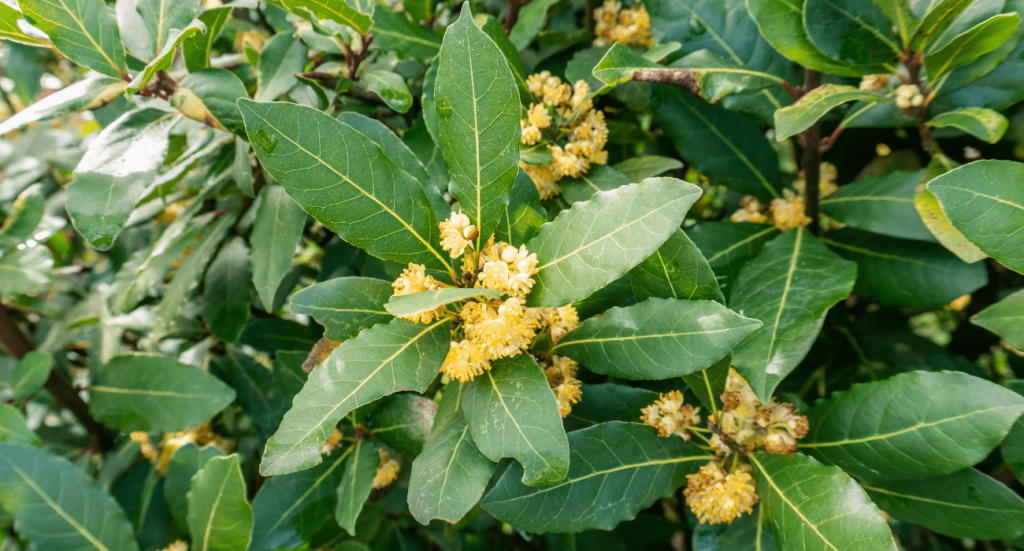
Tips:
- Remove the brown or yellow leaves. They will affect surrounded leaves.
- You can replace the old compost with new compost. Fertilizer is essential for your tree.
- Inspect your bay tree weekly, wipe out all the damaged trees because damaged and diseased leaves attract bugs and other insects.
- If your environment is too cold, there can be a sign of white marks on the leaves of your tree. This condition can also occur due to overwatering. Choosing the right container can solve this problem.
Also, read below tips for plants growth
- How To Add Calcium To Soil [21 Working Ways] Exclusive Guide
- How To Sterilize Soil For Plants Growth [21 Affordable Tips]- Ultimate Guide
- How To Add Nitrogen To Soil- Exclusive [15 Quick + Cheap Ways]
Do Bay Trees Like Sun or Shade?
When you want to grow a bay tree indoors, you should keep it near a sunny window. Never keep them near a heater or heat-producing appliances. So, we are adding some tips to keep your bay tree healthy.
Tips:
- If you are growing a bay tree outdoors, you should place it in a place where it can get both sun rays and partial shade.
- In hot and dry areas, shade is essential. Plant the tree at such a place where it will get enough shade.
- If you are growing the tree indoors, try to keep it near the window so that it can get sun rays.
Common Pruning Mistakes
Avoid heavy pruning during frost, repeatedly shearing only the outside of the canopy, leaving crowded branches in the center, and removing too much growth at once.
Selective pruning usually keeps a bay tree healthier than simply clipping the outer surface every year.
Can I Use Bay Leaves Straight from The Tree?
Bay leaves are one of the essential spices used in various cooking. Generally, you can get edible bay leaves from a supermarket or a shop.
Bay laurel leaf remains fresh and retains its flavors for up to six months when packed. If you have a bay tree in your yard, you don’t need to purchase it from the market.
You can use freshly picked bay leaves for cooking. For cooking purposes, you can use both dried and fresh bay leaves.
The flavor or aroma does not change if you use bay leaves directly from your garden by growing bay leaves. But if you want to store bay leaves for several months, here are some tips for you.
Tips:
- After picking bay leaves from the tree, they take up to three weeks to dry. You should cut a couple of stems from the plant and hang them in a dry place.
- Then wait for 14 days to 25 days for bay tree leaves drying.
- Store them in a jar or an air-tight packet.
How Do You Shape A Bay Tree?
It is not easy to shape a bay plant because it can take up to four years to achieve the desired shape. Also, the process of giving shape is not easy. The standard shape of a bay tree is a lollypop shape.
If you want to buy a lollypop shaped bay tree from the super shop, it will cost you at least $60. So, pruning a bay tree into the desired shape is not an easy task. Here are the tips for pruning your bay tree into a lollypop shape.
Tips:
- Remove the trunks from the main stem.
- Do not cut the top main growing shoot.
- Generally, bay trees grow from the height. So, you should remove all the shoots that come between a leaf and the main stem.
- It takes up to two years to grow the tree about 3 feet. When the tree reaches near the desired height, it will have a bushy top with several side shoots. You should prune them from the top to get the desired shape.
- It would help if you tied the main stem with a cane so that it can withstand high winds.
- Sometimes the main stem needs the support of several canes from different points.
How to Grow Twisted Stem Bay Tree?
You can grow a twisted bay easily. Though experts can do it correctly, you can also give it a try. Here are some tips for growing a twisted stem bay tree.
- Choose a very young and supple tree.
- Twist them around small supports so that they start growing around the supports.
- Remove the supports after someday.
- They will continue growing in the same way even if you remove the supports.
- Finally, they will get a spiral shape.
How to Grow Bay Laurel?
Bay laurel is a kitchen seasoning. It is an aromatic evergreen tree that features shiny, oval-shaped leaves. Other names of bay laurel are:
- Sweet laurel
- True laurel
- Crucial laurel
You can cultivate bay laurel at home. Growing bay laurel is not a difficult task. The procedure of growing bay laurel is easy.
If you want to get an idea about how to grow a bay leaf tree, here are your tips. We are adding the procedure for your convenience.
- Collect seed of bay laurel from small clumps of yellow flowers.
- You can train the trunks into braids or spirals.
- For container growth, you should use soil with organic compost.
- Make sure to maintain proper drainage.
- Plant the seed and water regularly.
- You can also plant a bay laurel herb.
- Prune and train the tree as you desire.
Bay Leaf Tree Diseases and Problems
Bay trees are more susceptible to some diseases. Some prevalent pathogens create problems on the leaves. There are different types of conditions. They are:
- Cultural diseases
- Pest problems
#1 Cultural Diseases
Due to nitrogen or mineral deficiency, these diseases occur. Common symptoms of these diseases are yellow or brown leaves. You can treat these diseases by adding organic mulch around the root because roots are the primary target.
#2 Pest Problems
Pest mainly attacks the leaves of the bay tree. Several types of pests can attack a bay tree like:
- Scales
- Psyllids
- Vine weevils
Before treating the pest, you must identify the pest type. These pests cause holes in the leaves and damage the tree.
If you do not cure these problems immediately, they will cause severe damage to the bay tree. Bay laurel tree care is essential.
How Epsom Salts Used For Bay Trees?
Bay laurel leaves tend to curl and turn into a spiral shape when bay leaf suckers attack the leaves. Sometimes the leaves get curled in the absence of some environmental factors.
This problem is severe, and if you do not start bay laurel leaf care immediately, they will consequently damage other leaves.
Epsom salts are very useful for treating this condition. You can spray your curled foliage by mixing two spoons of Epsom salt in one gallon of water. Epsom salts increase the absorption of roots. You can spread Epsom salts at the root zone. Epsom salts help in better absorption of minerals.
Overgrown Pruning Bay Tree Tricks?
If you are planning to prune an over-grown bay tree, you should know some tricks and tips. Here is some advice to help you with pruning the bay laurel tree.
Tips:
- Decide which size of tree you want. If you are going to make a shrub-like form, you need to cut a large portion.
- If you want to prune the tree to a decorative size, remove the lower branches.
- Remove all the young suckers from the bay leaf tree zone.
- In case of multiple trunks, you should remove 1/3 of the shrub’s stem.
How Old Should Sweet Bay Laurel Tree Be Before Pruning?
You can prune a sweet bay laurel of any age. Whenever there is any damaged leaves or trunks, you should prune them. The pruning depends on the desired shape. Here are some special tips for pruning sweet bay laurel.
Tips:
- If you want a lollypop shape bay tree, you should prune it at a young age.
- If it is a full-grown bay leaf tree, you can prune hard.
Who to Call for Tree Pruning in East Bay?
In east bay, some organizations provide pruning services. If you are in the east bay, you can call:
- Call-Line Tree Care
- Eli Tree Service
- Alex Tree Service
- Valley Falls Tree Care
How to Grow A Bay Tree From Cuttings?
Harvesting bay leaves from soft woodcutting are possible. The perfect time is in late spring or early summer, and semi-ripe cutting is available in early summer.
The process is not complicated at all. It would be best if you planted the cut portion in a container and keep it in a convenient place.
You may also like to read below gardening articles.
- What Are The Best Rosemary Plant Care + Growing Tips
- How To Kill Root Maggots In Garden [25] Natural Ways
- How To Prune Mountain Laurel (21 Pro Ways)- Step By Step
- Signs Of Termites In Trees: [25] Quick Fixes To Identify + Prevent ASAP
- Ants In Garden: [21 Cheap Ways] To Get Rid Of Ants In Garden Naturally
bay tree Trimming FAQs
Can you hard prune a bay tree?
Yes. Healthy mature bay trees can tolerate hard pruning, but gradual reduction is usually safer and gives a better-looking result. If the tree is badly overgrown, reduce it over several seasons rather than removing most of the canopy at once.
When is the best time to prune a bay tree?
The best time to prune a bay tree is late spring to early summer, after the risk of frost has passed. During this period, the tree recovers quickly and produces healthy new growth. Light trimming can also be done during summer to maintain its shape.
Can you hard prune a bay tree?
Yes. A healthy, established bay tree can tolerate hard pruning. If the tree is badly overgrown, it’s usually better to reduce its size gradually over two or three growing seasons instead of removing too much growth at once.
Why are shoots growing from the base of my bay tree?
These shoots are called suckers. They grow from the roots or the base of the trunk and compete with the main tree for nutrients and water. Remove them as close to their point of origin as possible to keep the tree healthy.
Why are my bay tree leaves curling?
Curling leaves are often caused by bay sucker insects, inconsistent watering, frost damage, or environmental stress. Check the leaves carefully for pests before assuming the problem is related to watering or nutrients.
Can I prune a bay tree in winter?
Winter is not the ideal time for major pruning because fresh cuts are more vulnerable to frost damage. If necessary, only remove broken or diseased branches during winter and save shaping work for spring.
How often should a bay tree be pruned?
Most bay trees only need one main pruning each year. Decorative topiary shapes, such as balls or lollipops, may benefit from light trimming once or twice during the growing season to maintain their appearance.
Do bay tree roots damage foundations?
Bay tree roots are generally shallow and non-invasive. When planted a reasonable distance from buildings, walls, and underground pipes, they rarely cause structural damage.
Can I keep a bay tree small?
Yes. Regular annual pruning and occasional trimming of new growth make it easy to maintain a compact bay tree in the garden or in a container. Avoid letting the tree become severely overgrown before pruning.
Should I remove yellow or damaged bay leaves?
Yes. Removing yellow, brown, or diseased leaves improves the tree’s appearance and helps prevent pests or fungal problems from spreading to healthy growth.
People Also Ask
- Can you cut a bay tree back hard?
- How long does a bay tree take to recover after pruning?
- Will a bay tree regrow after heavy pruning?
- Can I prune a bay tree in hot weather?
- Should I feed a bay tree after pruning?
Conclusion
Regular pruning is one of the best ways to keep a bay tree healthy, attractive, and productive for decades. Whether you’re maintaining a compact potted tree, restoring an overgrown specimen, or shaping a decorative topiary, pruning at the right time encourages stronger growth and improves the overall appearance of the plant.
Combine annual pruning with good watering, feeding, and routine inspections for pests and diseases, and your bay tree will continue to provide beautiful evergreen foliage and aromatic leaves for many years.

I am an enthusiast who loves plants very much and I do a lot of research online as well as outside in gardens and nurseries. I also strive to be as accurate as possible in my research and my articles. I have been involved in gardening for a long time and truly enjoy it. Know more about me About. You can also join me Here.