Here’s how to plant tomatoes: wait until the soil is about 60°F (16°C) and frost is over, set each plant in a sunny spot, and bury two-thirds of the stem.
Space them 2 to 3 feet apart, add a cage at planting time, and water deeply.
That’s the whole job in one breath. The details below cover timing, depth and spacing, plus what to do if a late cold snap threatens, which our guide on protecting plants from frost handles step by step.
This post contains affiliate links. As an Amazon Associate, Gardening Lovy earns from qualifying purchases.
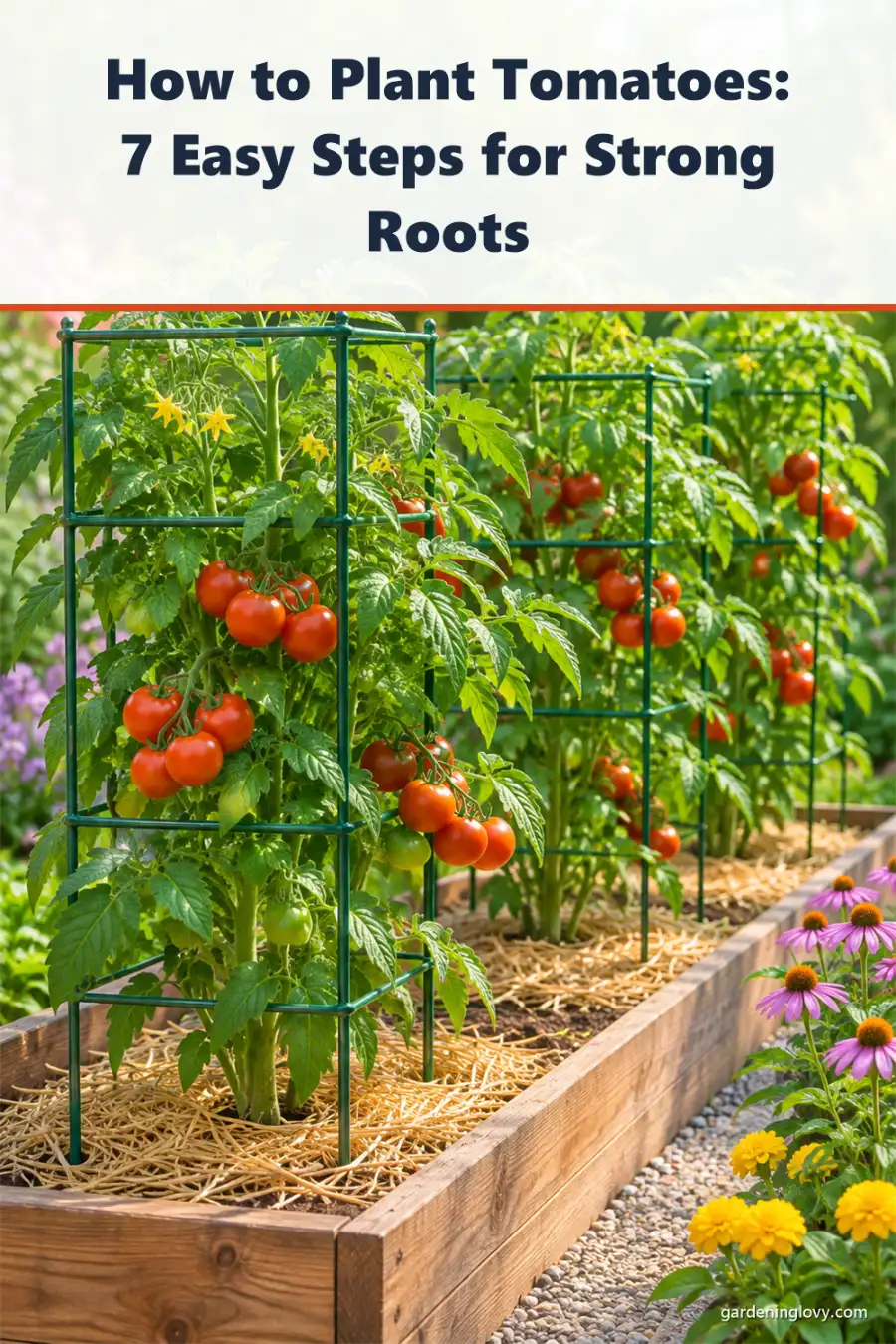
One thing to buy before planting day: sturdy square tomato cages. Put them in as you plant, because pushing a cage in later tears the roots.
| Tomato planting at a glance | |
|---|---|
| When | 1–2 weeks after your last frost, soil 60°F (16°C) or warmer |
| Sun | Full sun, at least 6–8 hours |
| Depth | Bury about two-thirds of the stem, or lay leggy plants in a 3–4 in. trench |
| Spacing | 2–3 ft (60–90 cm) apart; rows about 4 ft apart |
| Support | Cage or stake on planting day |
| First water | Soak the root zone right after planting |
| Pots | One plant per 12–18 in. (30–45 cm) pot |

When to plant tomatoes outside
Tomatoes love warmth, and spring rarely hurries. Cold soil stalls their roots for weeks, so a plant set out late into warm ground often catches up with one planted early.
Go by soil temperature and night lows, not the calendar. Plant once frost is past, the soil reads 60°F (16°C) at 4 inches deep, and nights stay mild.
| Where you garden | Typical last frost | Plant tomatoes outside |
|---|---|---|
| USDA zones 9–10 (Gulf Coast, Florida, Southern California, Arizona) | January to February, often none | February to March |
| Zone 8 | Late March | Early to mid April |
| Zone 7 | Early to mid April | Late April |
| Zone 6 | Mid to late April | Early to mid May |
| Zone 5 | Early to mid May | Mid to late May |
| Zones 3–4 and most of Canada | Mid May to early June | Late May to mid June |
| UK | Mid to late May | Late May to early June |
| Australia: Sydney, Perth, Adelaide | Few or no frosts | September to November |
| Australia: Melbourne, Tasmania, cool inland areas | October | November (Melbourne Cup Day is the local tradition) |
These are typical dates, about 2 weeks after the average last frost. Your own frost date can be 2 to 3 weeks earlier or later depending on elevation and nearby water, so check a local frost-date tool or your extension office.
Shopping for plants? Choose stocky ones with dark leaves and no flowers or spots. A tall, pale seedling still works, and our guide to fixing leggy plants explains why it stretched.
Where to plant tomatoes
Pick your sunniest spot: 6 to 8 hours of direct sun is the minimum, and more is better in cool, cloudy summers. Good drainage matters just as much.
Heavy clay or a soggy corner? A raised bed warms faster in spring and drains well. Our guide on filling a raised garden bed cheaply shows how to build one without buying bags of soil.
Move tomatoes to a new spot each year. Diseases build up in soil where tomatoes, peppers, potatoes or eggplants grew recently.
How deep to plant tomatoes
Deeper than you’d think. A tomato stem grows new roots wherever soil touches it, so a buried stem becomes a bigger root system that finds water in dry spells.
| Method | How | Use it when |
|---|---|---|
| Deep, upright | Strip the lower leaves and bury about two-thirds of the stem. A 10-inch plant keeps only its top 3–4 inches above ground. | Most transplants up to about 12 in. tall |
| Trench (sideways) | Lay the plant in a 3–4 in. deep trench and bend the top gently upward. | Leggy plants, cool or heavy soil, shallow beds |
| Same depth as the pot | Keep the graft union (the bump on the stem) above the soil. | Grafted tomatoes only |
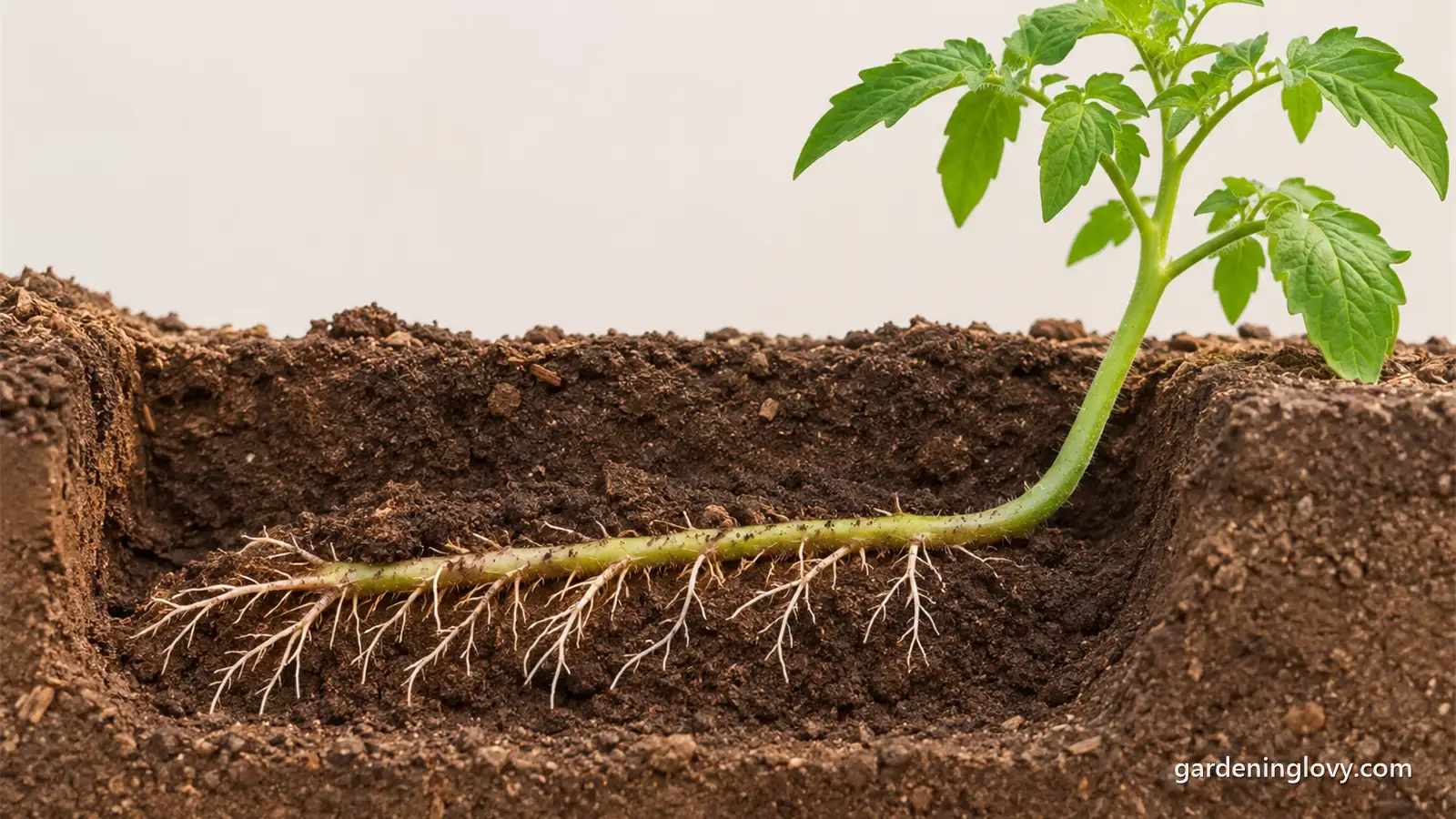
The University of Minnesota suggests digging a trench three to four inches deep and burying the stem up to just below the lowest remaining leaves.
The trench method keeps roots in the warm top layer of soil. That’s handy in northern gardens, where soil a foot down stays cold well into June.
How to plant tomatoes, step by step
Harden them off first
Plants raised indoors or in a greenhouse need a gentle week outside before planting. Skip it and bright sun and wind can scorch the leaves white within a day.
Nebraska Extension suggests hardening off gradually over 7 to 10 days. Start with 2 to 3 hours in shade, out of strong wind, and add a few hours of sun each day.

Planting day
Choose a cloudy, calm day or late afternoon. Plants settle in overnight instead of wilting in midday sun.
- Water the pots first. A moist root ball slides out in one piece.
- Loosen the bed. Mix 1 to 2 inches of compost into the top foot of soil.
- Set the cage or stake. Push it in before the plant, so you don’t spear roots later.
- Dig deep. Make the hole or trench deep enough to bury about two-thirds of the stem.
- Strip and plant. Pinch off leaves that would sit below the soil, then firm the soil gently around the stem.
- Soak it. Give each plant a slow, deep drink at the base, not over the leaves.
- Mulch once the soil is warm. Spread 2 to 3 inches of straw or shredded leaves, keeping it an inch from the stem.
Planting from peat pots? Tear off the top rim or bury it completely. An exposed rim acts like a wick and pulls water out of the root ball.
What to put in the hole (and what to skip)
Keep it simple. Compost and a light handful of balanced organic tomato fertilizer, such as Espoma Tomato-tone, are all a new plant needs.
- Skip high-nitrogen feed. It grows big, leafy plants that are slow to fruit. Here’s how to spot too much nitrogen in soil.
- Skip fresh manure. It can carry harmful bacteria. Use well-rotted compost instead.
- Never use weed-and-feed products. The weed killer in them can harm vegetables.
Worried about blossom-end rot? It’s usually a watering problem rather than a shortage of calcium in the soil. Uneven moisture stops calcium reaching the fruit; see adding calcium to soil for when a top-up really helps.
How far apart to plant tomatoes
Crowded tomatoes stay damp and shade each other, and that invites leaf diseases. Give them more room than the tiny transplants seem to need.
Iowa State University spaces vining (indeterminate) tomatoes 2½ to 3 feet apart in wire cages, with rows about 4 feet apart.
| How you grow them | Space between plants |
|---|---|
| Vining (indeterminate) in cages | 2½–3 ft (75–90 cm) |
| Vining, left to sprawl | 3–4 ft (90–120 cm) |
| Bush (determinate) | 2–2½ ft (60–75 cm) |
| Single-stem cordons on stakes (UK style) | 18–24 in. (45–60 cm) |
| Pots | One plant per 12–18 in. (30–45 cm) pot |

Planting tomatoes in pots
No bed? Tomatoes grow well in containers if the pot is big enough. The RHS suggests one plant in a 30–45cm (12–18in) pot, planted out once temperatures stay above 16°C (60°F).
- Choose bush, patio or cherry varieties for pots; tall vining types need a big tub and a strong stake.
- Fill with fresh potting mix, not garden soil, and check the drainage holes.
- Plant deep here too, then water until it runs out of the bottom.
- Expect to water daily in hot weather, and feed with a high-potassium tomato feed every 10 to 14 days once fruits swell.

For potting mix, pot size and watering basics, see our container gardening guide for beginners.
The first two weeks after planting
New transplants often droop on their first sunny afternoon. If they perk up by evening, they’re fine. Keep the soil evenly moist, not soggy, while roots spread into the bed.
Water deeply two or three times a week rather than a splash every day. Light sprinkles keep roots shallow, and wet leaves invite disease.
A few yellow lower leaves in week one are usually transplant stress. If yellowing climbs the plant, check our guide to tomato leaves turning yellow.
6 tomato planting mistakes to avoid
- Planting into cold soil because one warm weekend arrived early.
- Setting the plant at pot depth when it could have been buried deep.
- Burying a grafted tomato above the graft, which lets the top grow its own roots and wastes the rootstock.
- Adding cages or stakes weeks later and slicing through roots.
- Planting 12 inches apart, then fighting leaf disease all summer.
- Putting tomatoes back in the same bed every year.
Tools that help
Three simple things cover planting day. For cages, pick ones at least 4 feet tall for vining varieties; short, cone-shaped cages suit only bush tomatoes.

Square tomato cages
Tall, sturdy support for vining tomatoes. Set them on planting day.
Check price on Amazon
Organic tomato fertilizer
A gentle, balanced feed with calcium. A handful in the planting hole is plenty.
Check price on Amazon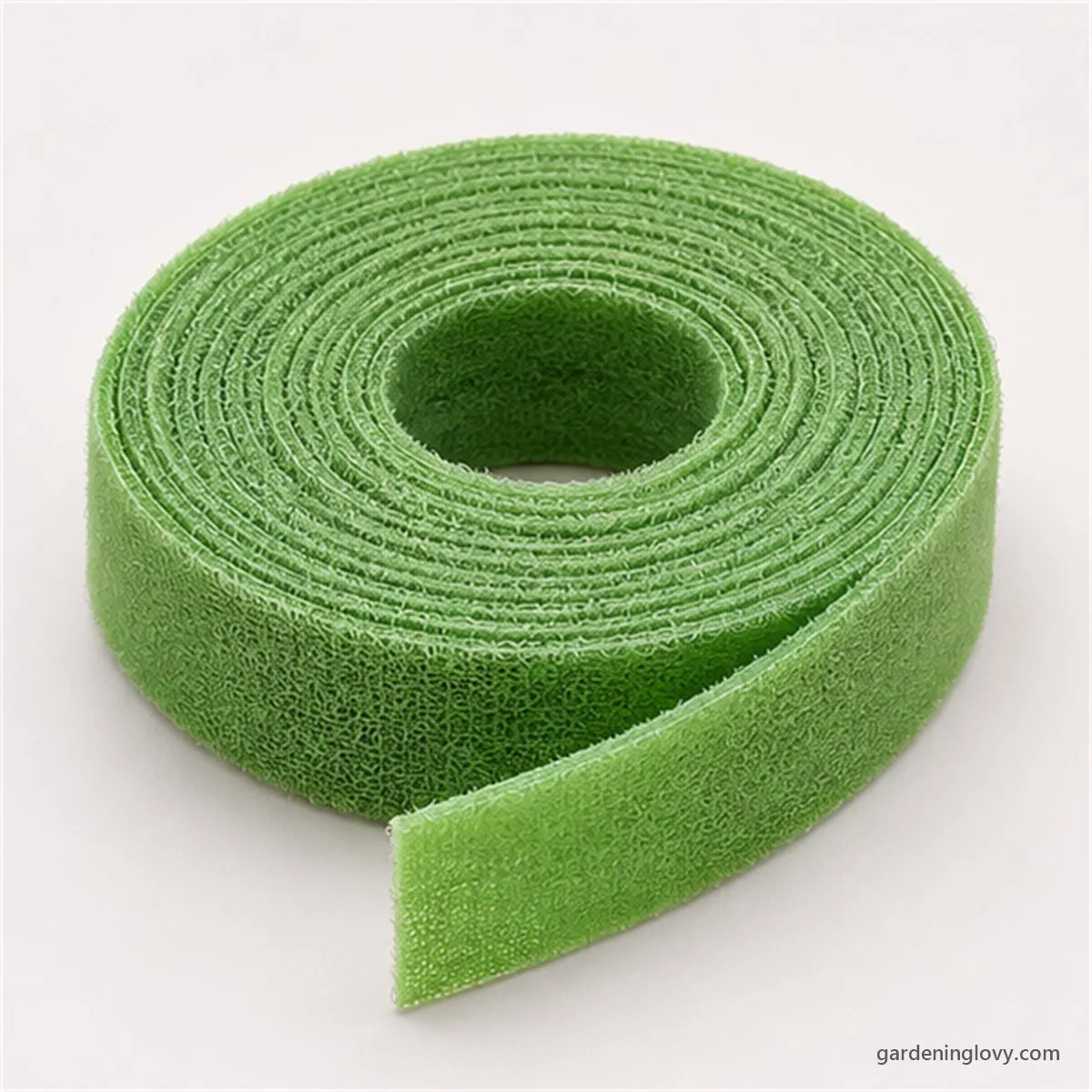
Soft plant ties
Stretchy ties hold stems to a stake without cutting in as they thicken.
Check price on AmazonFrequently asked questions
How deep should tomato plants be planted?
Bury about two-thirds of the stem, so only the top few sets of leaves sit above the soil. Strip off any leaves that would end up underground first. For tall, leggy plants, lay the stem sideways in a 3 to 4 inch trench instead of digging a very deep hole.
How far apart should tomatoes be planted?
Space vining tomatoes in cages 2½ to 3 feet apart, and bush types 2 to 2½ feet apart, with rows about 4 feet apart. Single-stem plants on stakes can go a little closer, about 18 to 24 inches. Crowded plants stay damp and get more leaf disease.
What do you put in the hole when planting tomatoes?
Compost mixed into the soil and a small handful of balanced organic tomato fertilizer are enough. Skip high-nitrogen fertilizer, fresh manure and weed-and-feed products. Set the cage or stake at the same time, before you backfill.
When is it too late to plant tomatoes?
Count back from your first fall frost. Your plants need the variety’s days to maturity plus a couple of weeks. In central Iowa, Iowa State gives about June 20 as the last practical date; warmer zones can plant later, and the South often plants a second fall crop.
Should I water tomatoes right after planting?
Yes. Soak the soil around each plant right after planting so it settles around the roots. Then water deeply two or three times a week, more in hot weather or in pots, aiming at the soil rather than the leaves.
Can you plant tomatoes too deep?
Not usually, as long as the top few sets of leaves stay above ground and the soil is warm. The exception is grafted tomatoes: keep the graft union above the soil, or the top grows its own roots and you lose the rootstock’s benefits.
Conclusion
Planting tomatoes well takes one patient spring morning. Warm soil, a deep hole and room to grow set up the whole summer.
- Plant after frost, once the soil reaches 60°F (16°C).
- Harden plants off for 7 to 10 days first.
- Bury two-thirds of the stem, or use a trench for leggy plants.
- Space 2 to 3 feet apart and set supports on planting day.
If you only do one thing: plant deep.
Recommended reading
- How to grow green beans
- How to grow Campari tomatoes
- Transplanting hydroponic tomatoes to soil
- How to grow zucchini
- Overwatering vs underwatering plants

I am an enthusiast who loves plants very much and I do a lot of research online as well as outside in gardens and nurseries. I also strive to be as accurate as possible in my research and my articles. I have been involved in gardening for a long time and truly enjoy it. Read more about me and how I research my guides, or join me on Facebook.