
This guide covers 5 Easy Gardening Tips for Summer that help you start a healthy, productive summer garden—whether you’re growing vegetables, herbs, or flowers in pots, raised beds, or backyard soil.
Starting a garden in summer can be one of the most rewarding experiences, but it can also be frustrating if you don’t understand how plants behave in heat.
Many beginner gardeners assume summer is the easiest season to grow plants because of sunlight and warmth. In reality, summer gardening requires smart planning, not extra effort.
High temperatures, rapid moisture loss, and increased pest activity mean your plants depend more on your gardening habits than ever before.
The good news is that you don’t need expert knowledge or expensive equipment to succeed. You just need to master a few simple, proven basics.
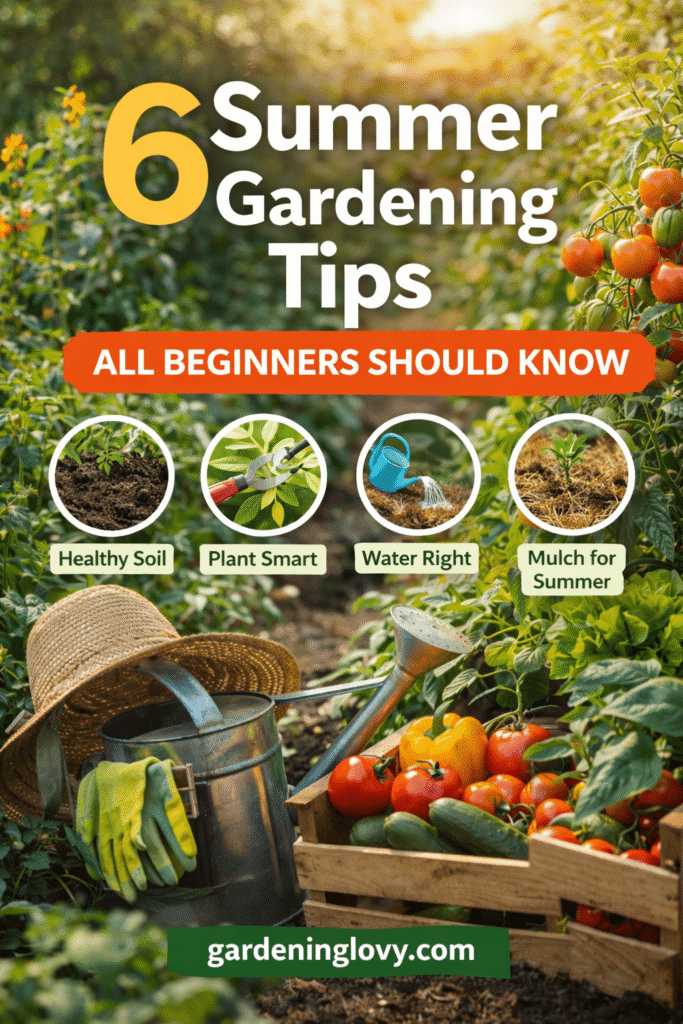
Why Summer Gardening Fails for Many Beginners
Before we move into the tips, it’s important to understand why many summer gardens struggle.
Most failures happen because of:
- Poor soil preparation
- Wrong plant choices for heat
- Overwatering or shallow watering
- Ignoring mulch
- Late pest control
When these mistakes pile up, plants become stressed, weak, and unproductive.
Now let’s fix that—step by step.
Tip 1: Build Healthy Soil Before You Plant Anything
Healthy plants always start with healthy soil. If your soil is weak, plants will struggle no matter how much you water or fertilize.
What Healthy Summer Soil Should Do
Good summer soil should:
- Drain excess water easily
- Hold moisture during heat
- Allow roots to breathe
- Provide slow, steady nutrients
Easy Ways to Improve Garden Soil
You don’t need to replace your soil. Simple improvements make a big difference:
- Mix compost into the top layer
- Add organic matter like aged manure or vermicompost
- Break up compacted soil
- Remove stones and hard clumps
For container gardening, always start with a high-quality potting mix designed for vegetables and flowers. Using a well-draining organic potting soil helps prevent root rot and heat stress, especially in summer containers.
👉 For more gardening basics explore soil preparation.
Tip 2: Choose Plants That Can Handle Summer Heat
One of the biggest beginner mistakes is planting crops that prefer cool weather during peak summer.
Plants That Thrive in Summer
These plants naturally tolerate heat and grow fast:
These crops love sunlight and reward consistent care.
Plants That Need Extra Protection
Some plants struggle in extreme heat:
- Lettuce
- Spinach
- Cilantro
- Peas
If you want to grow these, give them morning sun and afternoon shade.
Pro Tip for Beginners
Always check:
- Sun requirements
- Water needs
- Final plant size
This prevents overcrowding, which causes disease and poor airflow.
👉 You can find plant-specific care guides and seasonal planting advice on Here.
Tip 3: Water Deeply, Not Frequently
Summer heat causes many gardeners to overwater. While it feels logical, shallow daily watering actually weakens plants.
The Correct Way to Water in Summer
- Water deeply so roots grow downward
- Focus water at soil level, not leaves
- Water early morning or late evening
- Avoid watering during peak afternoon heat
Deep watering helps plants become heat-resistant and drought-tolerant.
How to Know When to Water
Check soil moisture by inserting your finger 2–3 inches deep:
- Dry → Water
- Moist → Wait
Container Gardening Tip
Potted plants dry out faster. Using self-watering planters can help maintain consistent moisture without waterlogging roots, especially for beginners.
👉 Learn more watering mistakes and fixes in the plant care tips.
Tip 4: Mulch Is the Secret Weapon of Summer Gardening
If you do only one extra thing in summer—mulch your soil.
Mulch acts like insulation for plant roots.
Benefits of Mulching
Mulch helps:
- Keep soil cool
- Reduce evaporation
- Prevent weeds
- Improve soil quality over time
Best Mulch Materials for Summer
- Dry leaves
- Straw
- Bark chips
- Coconut husk
- Grass clippings (fully dried)
Apply mulch 2–3 inches thick, keeping it slightly away from the plant stem.
Common Mulching Mistake
Never pile mulch directly against stems. This traps moisture and invites rot.
Using mulch can reduce watering needs by up to 40% during hot months.
Tip 5: Protect Plants From Heat Stress and Pests Early
Heat-stressed plants attract pests. Prevention is always easier than treatment.
Simple Heat Protection Methods
- Use shade cloth during heat waves
- Place pots where they get afternoon shade
- Avoid dark containers that absorb heat
Natural Pest Control Tips
- Inspect leaves weekly
- Remove damaged foliage early
- Encourage beneficial insects
- Avoid chemical sprays during extreme heat
When pests appear, act quickly with gentle solutions. Using a neem oil spray for plants is an effective organic way to control aphids, mites, and whiteflies without harming beneficial insects.
For science-based pest control and plant health guidance, advice from the Cornell Cooperative Extension plant and pest management guides is widely trusted by gardeners and horticulture professionals.
Extra Summer Gardening Tips Most Beginners Overlook
Don’t Overcrowd Plants
Crowding reduces airflow and increases disease risk. Always follow spacing recommendations.
Feed Plants Lightly
Fast summer growth doesn’t mean heavy feeding.
- Use compost tea
- Diluted organic fertilizers
- Avoid excess nitrogen in extreme heat
A balanced organic vegetable fertilizer provides nutrients without burning roots.
Prune Carefully
Remove:
- Dead leaves
- Damaged branches
- Excess growth blocking airflow
Gentle pruning improves plant health and productivity.
Container Gardening Tips for Summer Success
Many beginners garden in pots—and summer heat makes container care critical.
Key Container Gardening Rules
- Choose pots with drainage holes
- Use light-colored containers
- Elevate pots slightly off hot surfaces
- Check moisture daily
Using breathable fabric grow bags helps roots stay cooler and prevents waterlogging, making them ideal for summer vegetables.
Common Summer Gardening Mistakes to Avoid
- Watering every day without checking soil
- Skipping mulch
- Planting shade plants in full sun
- Ignoring early pest signs
- Using strong chemicals during heat
Avoiding these mistakes alone can double your success rate.
Gardening for Beginners: Keep It Simple
Gardening doesn’t need to be perfect to be successful.
A healthy summer garden needs:
- Nourished soil
- Heat-tolerant plants
- Smart watering
- Mulch protection
- Regular observation
Gardening is a learning process. Each season teaches you something new.
Gardening Tips for Summer Final Thoughts
Summer gardening becomes enjoyable when you stop fighting the heat and start working with it.
By following these 5 easy gardening tips, you’ll:
- Grow stronger plants
- Save water
- Reduce stress
- Enjoy better harvests
- Build long-term gardening confidence
Whether you’re growing vegetables, herbs, or flowers, mastering these basics sets you up for success season after season.

I am an enthusiast who loves plants very much and I do a lot of research online as well as outside in gardens and nurseries. I also strive to be as accurate as possible in my research and my articles. I have been involved in gardening for a long time and truly enjoy it. Know more about me About. You can also join me Here.